

No one will know about your awesome writer website if you do not start to pay attention to writer SEO.
And without all the connections on your website you could be making, guess what happens? You miss will out on sales. And you may also miss out on places where you can appear and promote your book. Or libraries where people can discover and borrow your book.
Note: this is an overview and not the details of any form of SEO, even writer SEO or AIO (artificial intelligence optimization). That would take up a few hundred blog posts at least.
Why Does Writer SEO Matter?
Have you ever wondered how and why the results you get in a search are in the order they are in? Yes, some of this has to do with paid advertising. But budgets are not infinite. Or, at least, they are not for most of us.
But SEO is, in a way, a form of free advertising. Optimizing for search means your post gets placed further up on search results. And that is good. But is it good enough?
Page 1 or Die
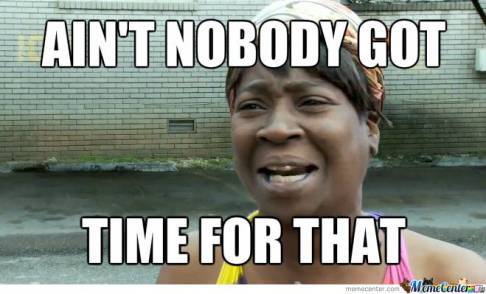
We live in a hurry-up, impatient, “ain’t nobody got time for that” world. And a good 90% or more of us never bother with the second page of search results!
So, while positive changes in position are nothing to sneeze at, they do not truly matter unless you are on page 1 of results. AI will also be more likely to choose your site as a source if you do SEO right.
If that seems unfair, odd, and maybe even a reason why the human race is doomed, well, I am totally with ya on that.
Yet our preferences do not matter.
Ads Are Outta Control!
But… there is one problem with writer SEO or really any kind of SEO or AIO. We are all gunning for page 1. And that means that the competition is fierce.
I am talking about you, me, and large corporations with insanely big budgets. There are people who have been doing SEO since before it had a name (or at least it feels that way). So, how do you compete?
An Itch for a Niche
Exxon is enormous! Their annual ad budget may very well be more than everything I have ever made in my life. And probably ever will.
But they are not competing in the writing space. Even if their CEO decided to write a book, they would not be my competition. And they might not even really be my competition if their CEO decides to try their hand at writing something in the exact same genre as me.
Is James Patterson my competition? Well, not exactly. Yes, we are both writers. But that is where the comparison stops. Now, Patterson does write science fiction. But are we really in direct competition? For one thing, a lot of his sci fi stuff is aimed at teens. Mine … is not.
So, maybe I do not have to worry about him, or at least not too much. Same with JK Rowling and Stephen King, particularly as they do not really write in my genre.
A Niche to Scratch
Amazon is great about having separate categories which match a ton of niches. Consider horror. Even if vampires, werewolves, wendigos, mummies, and serial killers were all in the same novel or film, so what? They all still have their own sub-niches (if you will) within horror.
Science fiction has a number of well-known niches:
• Space opera – this is like Star Trek. My novel The Enigman Cave fits this niche, as it is also following people on a spaceship.
† Dystopian – this is like Ready Player One. My novels Mettle and Untrustworthy both fit this niche, even though they are set in different places.
• Science fiction noir – this is like Blade Runner or I, Robot, where cops and science fiction mix. My Obolonk and Time Addicts trilogies both fit. This is not a large genre and Amazon does not have it as a filter. But the good news is that there might not be a lot of competition…
† Time travel – this is like the old TV show, The Time Tunnel. Time Addicts fits this niche.
• Historical science fiction – now, this one is tricky.
Issues with Historical Science Fiction
Science fiction is not normally set too far in the past. Even Stranger Things just goes back to the 1980s.
Without getting into Steampunk, one of the only examples I can think of are the films Time After Time (where HG Wells himself has to chase Jack the Ripper in the modern era) and Somewhere in Time (1970s playwright Richard Collier goes to the turn of the 20th century via hypnosis and falls in love with actress Elise McKenna).
In both stories, someone in the present is writing about the past. It makes sense that it would be a vehicle for a time travel story.
My Real Hub of the Universe trilogy fits this niche of a niche, which is so small that Amazon does not list it as a genre (although at least GoodReads does!). And looking it up often means you find science fiction books written earlier in history, such as The Island of Dr. Moreau.
As a result, when you put that kind of work onto Amazon or the like, your tags and keywords had better be pitch-perfect and utterly on point.
Your Writer Website and Your Niche(s)
I am not the only author who writes in more than one niche. In fact, many authors who do so will use a pen name or even several pen names.
So, for someone like me, writer SEO means looking at competition in all of these niches. And it means looking at the keywords which the more successful posts (the ones at the top of search, which do not necessarily belong to bestselling authors) are using.
Keyword Research for Writer SEO
People who do SEO for a living are researching keywords pretty much all the time. It is a fancy way of trying to determine what people are looking for. If you can give it to them, then you want them to be able to find you.
The closer what is on your website matches their search, the higher up (usually) your content will be in search engine results.
Google’s mission is to match seeker and website owner as closely as possible. Because if a person has a good experience with Google, they are more likely to use Google than, say, Bing.
As a result, Google can charge more for its advertising (and yes, unfortunately, paid ads are dominating the first page of search results. So page 2 can get some love after all—but never settle for anything lower).
AI is also looking for top-level stuff. A buried website is not very likely to be cited by AI.
Synonyms and Intent
To use an example a different form of art, consider film. Or cinema. AKA movies. Or pictures. AKA Hollywood or Bollywood or the Oscars or BAFTA awards, etc.
What is the difference in intent between these two searches:
† movie for kids not Disney
• classic cinema for children
Now, they both pull up lists of movies for the younger set. But the first is more likely to pull up articles about The Land Before Time, whereas the latter might pull up blog posts about The Red Balloon. Between the two searches, the first is more likely to pull up animation, too.
Now consider your books. I will use the Time Addicts trilogy as an example.
† time travel with robots
• science fiction noir in the far future
Both searches would fit this trilogy. The first gets a lot more hits. But the latter pulls up much more closely-related stuff. And if I change the first one to time travel with aliens (which would also fit Time Addicts), it gets me TV programs about ancient aliens.
What is a better set of keyword phrases (kwps) to target? Probably some mix of these:
† science fiction noir
• sci fi noir
† science fiction set in the far future
• time travel noir (although currently there are two kinds of returns on this search which are coming up a lot)
Writer SEO, Searches, and Your Buyer Persona
Who is your ideal reader? Your ideal customer? You have got to market directly to them. And you will need to write your blog and pages, etc. with that person in mind.
If your ideal reader did not finish high school, then a term like movies is more likely to work than cinema. And if your ideal reader is female, you may want to toss in terms like feminism or strong female character.
If your ideal reader is a member of the LGBTQ+ community, then you will need to use terms which will apply. But I would caution you to be careful here. Terms evolve quickly.
What was acceptable in 1999 is not necessarily going to fly in 2026 or later. And for God’s sake, don’t try to reclaim a slur unless you would be a subject of said slur. And even then?
Just, don’t.
Writer SEO: Takeaways
Like I said above, this barely scratches the surface. Try tools like Keywordtool.io, answerthepublic.com, and MarketMuse (or Surfer SEO, Ubersuggest, or AhRefs) for more advanced ways to better target your ideal reader.
Set this site as a preferred source
Want More of Writer Website Development?
If my post on writer website SEO resonates with you, then please be sure to check out my other articles about how to create a writer website.
Writer Website Development
• Start a Writer Website
† How to Create a Writer Website: What to Write About
• Writer SEO
† Writer Website Copyright
• How to Create a Writer Website: Writer Website Design
† Mobile Design
• How to Create a Writer Website: Writer Website User Experience Design
† Writer Website Speed and More UX Design
• Next article
Get your author website going the smart way and use SEO! #amwriting
Leave a Comment

You must be logged in to post a comment.