Skip to content

Month: July 2026

How to Create a Writer Website: Writer Website User Experience Design

Whether you re just starting out or are updating an older author website, writer website user experience design is something you must consider.

How Writer Website User Experience Design Can Help or Hurt You

Do yourself an enormous favor, and Google the placement office at your alma mater. If you did not go to college, then any local college or university will do. The name might be something like career development.

I am a ridiculous overachiever and have the oddest resume you are ever going to see. So, I have three alma maters, heh. To illustrate my point, I will look at them in turn (but what does this have to do with writer website design, I hear you cry. Trust me, you will see).

Boston University

The BU Center for Career Development has of course changed a lot since I graduated. Which was before a lot of people were born, 1983. Heh.

Colors are bold and it is pretty easy to find stuff. BU also knows their audience. It is a large university, over 100 years old, and has a variety of schools.

Just appealing to undergraduates would alienate alumni returning to look for work. Still, there is no doubt that undergraduates are the main focus. If I wanted to look for work via BU, I would probably go straight to their alumni association. Yet there is no link or suggestion to do that.

Rather, I am just left to founder.

Well, that kinda stinks.

I would give BU a 3/5. What is there is very easy to read and navigable. But they are utterly neglecting a good chunk of their audience, and not even giving us an escape hatch.

Widener Law School (Delaware Campus)

The Widener Career Development Office has a rather different focus, as there are no undergraduates. There are certainly undergrads at Widener, but they are not at the law school.

And, the jobs the Widener office is going to send people to will inevitably either be private practice, JAG Corps (the military), or something academic.

There may be a few government agency jobs sprinkled in there. Also, because it is a regional type of school, jobs will most likely be in Pennsylvania, Delaware, and New Jersey.

There may be a few in Maryland or New York. And if there are any federal jobs, then they will most likely be in DC. But if you want to work in Indiana, you are out of luck.

Notice anything else?

The font is larger than it was for BU, and it is a serif font, whereas BU was sans serif.

Widener knows their audience is older, certainly at least about 20 years old (more likely to be closer to 25 at the youngest), whereas BU may have some audience members as young as 16.

Also, Widener probably figures most people will read their site on a laptop or desktop. At BU? Tablets or phones.

I would give Widener a 2/5. While it does account for user age and perhaps sensibilities, I did not see any way to get to any jobs! You have to click on students before you get to any place with jobs. If you click on alumni, the message is about mentoring and recruiting.

Hence the assumption is, you have already graduated so, you do not need to look for work. Would that it were so easy, Widener.

Quinnipiac University

The QU Career Development Office is a lot more image-heavy. It is another sans-serif site, and the font is smaller, like for BU. There is not a lot of information on the front page, but that is by design.

Rather, you scroll down and you are given a choice of six schools and their College of Arts and Sciences. You can go straight to the appropriate placement office from there. But once there, there is not a lot beyond telling you to contact the director.

While there are listings to tell you where people have landed, you have no names or contact info. So, knowing someone ended up at Apple, for example, is lovely. But, what does that have to do with the price of tea in China?

As an alum, I had to back out of the CDO and go to the home page for QU, click on alumni and then on career development, and then, finally, job postings.

And then I had to choose QUCC or an external link that ended up not working. Not a good look, QU.

I would give QU a 3.5/5. Triaging people by school was smart, but there was no accommodation for us older folks who might have less than stellar eyesight.

Writer Website User Experience Design is About Accommodations

For all three schools, the web developers did a decent job with functionality. Nothing was slow. Yet there were places where all three could improve.

Hiding what the readership was looking for was a problem for all three schools. Seriously, when I go to a placement office, I want to see jobs. At the barest absolute minimum, there should have been a way to sign up for notifications or to get into the system.

And that information should have been front and center. It was a use case that all three schools missed entirely, the concept of an alum out of work or a student over the summer, who just wanted to look for a job. No talk of careers or callings or majors.

Just. A. Job.

What really irks me is that these schools all have good budgets. So, why didn’t they do any better?

The Writer Website User Experience Design on YOUR Author Website

Most of us indie writer types do not have access to any sort of a meaningful budget. And, if we do, it is likely better spent on cover designs, editor services, and paying for hosting, or for swag and accommodations for events.

So, you are probably not going to be doing any sort of user experience testing. But that does not mean you cannot perform some thought experiments. Come with me, if you will.

Buyer Personae

Who is your ideal reader? Who buys your stuff? And, if you are not selling yet, who do you think would buy it? This is  beyond your family, close friends, and fellow authors doing trades.

Name this person, and give them a face. Give them demographics. Here is mine.

Meet Amy Shapiro

Amy Shapiro is a science fiction fan who is older than the standard college crowd but still somewhat identifies with them (she is between 35 and 70 years old). She is college-educated and probably has three or fewer children, if any. She is either married or in a long-term relationship. Her sexuality is more likely to be straight but she might be bi.

Amy is Jewish although not strict and does not keep kosher. But she does see that depictions of people just like her tend to be one-dimensional.

Where are the Jews in space?Alicia Silverstone (to depict buyer persona Amy Shapiro), to illustrate writer website user experience design

Amy loves sci fi but she still finds it hard to see herself on the page or the screen. After a certain age, women fall off a cliff in Hollywood, Sigourney Weaver and Carrie Fisher notwithstanding.

She also wants something unique and different, and is willing to read a number of different kinds of plots.

Amy is comfortable with some sex scenes, even explicit, if they are not purely gratuitous. The same is true of violence, but gore makes her squeamish.

This image (from Wikipedia, so it is under a creative commons license and therefore okay to use) is of actress Alicia Silverstone, a nice Jewish gal who was born in 1976 and fits the model perfectly.

Use Cases Help Your Writer Website User Experience Design Straighten Up and Fly Right

I alluded to this already, but now is the time to get more specific. A use case is essentially how you think a person will use a particular product or service.

Of course, people who buy books intend to eventually read them. So, I am not talking about use cases for books. Rather, I mean use cases for your writer website.

Writer Website User Experience Design — Appropriate Use Cases

Why do people go to author websites?

What do they want to accomplish? What can they get there and nowhere else, online or off?

I believe the following use cases exist for my site. Most of them probably do for yours (or will) as well:

1. Customers who want to buy my books
2. Fellow indie writers (just like you!) who want to discuss and learn about the craft
3. Fans looking to personally connect to me
4. People who want to learn about using social media and some web design (mostly intersects with #2, but not 100%)

Buyers

This is a group who, I will be first to admit, I am not serving well. But they are the easiest to serve. They need links to buy, a shopping cart, ways to pay, and a means to check out and go home (figuratively) happy.

Craft Discussers

These are people I serve with posts like this, but also posts about inspiration, plotting, editing, and beta reading.

Fans (hi!)

For fans, the more personal ways I serve them are with self-reviews and progress reports. They want to know what I am working on, and I like to think they want to know how I feel about that as well.

Social Media/Web Design Students

Posts just like these serve this group. So do a lot of the book reviews I have done over the years. I have read a ton of books on social media, etc. These folks want to know if those reads are worthwhile.

Takeaways for Writer Website User Experience Design

I know Amy is a buyer/fan, or at least I would like her to become one if not both. To better serve her, I need to set up sales, a thing I have not done yet.

Here are takeaways for you:

1. Consider your ideal reader/customer and how you can appeal to them
2. Why do you believe they are coming to your author website? Offer them what they want and need
3. Take the time to determine who your ideal buyer persona really, really is (yes, I am repeating myself, but it is that important)

Who’s your Amy?

Set this site as a preferred source

QR Code


Want More of Writer Website Development?

If my posts on author website development and writer website UX design resonate with you, then be sure to check out my other articles about how to create a writer website.

Writer Website Development

How to Create a Writer Website: Start a Writer Website
What to Write About
Writer SEO
Writer Website Copyright
How to Create a Writer Website: Writer Website Design

Mobile Design
• Writer Website User Experience Design
How to Create a Writer Website: Writer Website Speed and More UX Design
Next article

U/X design will make a difference with your writer website! #amwriting

Leave a Comment

How to Create a Writer Website: Mobile Design

No matter how much you may be used to using a laptop or a desktop computer to go to websites, that does not mean your website visitors will do the same. You have got to take mobile design into consideration.

Good Mobile Design is Imperative Because Phones are Everywhere

It is not just that they are everywhere. It is that so many people use their phones to surf the internet.

Statista says, in 2020, the number of mobile phone search users in the United States was 211 million. And, in 2020, according to the US Census, there were 311 million people in America. Note: the census data is for April 1, 2020, which is around when Covid started to really hit.

But you say there are (or at least were) 100 million people not using cell phones for search. Yep.

But there are very young children and very old folks in that group of 100 million. There are people who are comatose, and people who do not understand how to use a cell phone.

Plus there are folks who do not have cell phones at all, and people who would use a phone for search but do not want to use data on a limited plan.

So, they are not all die-hards who are digging their heels in and refusing to use their phones for search.

Oh, and consider that there are parts of the world where phones are a lot more popular than computers. Lots of Asia is like that. If your readers are there, then you really need to be working on mobile design for your author website.

But it is More Than Just Search

What happens after you find something online? On occasion, you might take note of it or bookmark a page. But the vast majority of the time, you go to that site.

But what if your site looks awful? And not just in a design way. Rather, in an unusable way.

To be fair, this article from Search Engine Journal is from 2013. I would hope most of the offenders would have pulled their socks up by now.

But the image below is not just of a lousy mobile design experience. It is also, it would appear, a site which has not been updated since (a conservative estimate here) 1987.

Search Engine Journal example of bad mobile design
Search Engine Journal example of bad mobile design – please, make the pain stop!

That is … pretty dang terrible.

It All Goes Together in a Great, Big Design Stew

So, the metaphor (or is it a simile?) sounded better in my head, okay?

Yet the principle is still there. That is, that a writer website has got to have good overall design and navigation.

But it also needs to provide a good user experience.

And it also must serve mobile search well.

Thank God for WordPress

No, seriously, they do not pay me. I just think they are pretty dang awesome.

You can accomplish the overall design (of any sort) of a WordPress site through the use of themes.

A theme can make your site pop, or it can make it look odd if you pick a theme that does not handle your kind of site well.

Fortunately, WordPress does their best to separate the wheat from the chaff. And, themes are searchable.

So, search for a theme that is mobile-friendly.

You can run the search either within WordPress or on Google or Bing.

These are the terms you should use for your search:

light mobile friendly WordPress themes free

Light means minimal html or other code. In this instance, it does not mean light in color.

You may or may not want to add the word responsive to that search.

The problem is not finding one of these themes. It is in choosing the one that you believe will serve your needs the best. WordPress absolutely spoils you for choice.

Clickable Elements and Google Search Console and Mobile Design

Er, what?

I have seen this problem before, and on more than one website. Google Search Console is owned by Google and it is how (with notifications that can hit your email) it tells you if there are problems with your website. This includes problems in its mobile design.

One issue I have seen before is “clickable elements too close together”. Putting a bunch of anchored links close together on a post can potentially do that.

Take note of these errors if you see them, and work to fix them. Sometimes that means moving an image or a link.

But if it persists, you may want to shift to another mobile-friendly theme. And do the designer a favor and tell them! They may have a workaround you can use.

Takeaways for Writer Website Mobile Design

Here are three takeaways on author website mobile design:

1. More people than ever before are using their phones to surf the internet, search, and buy things—things like your books

2. WordPress has a ton of mobile friendly themes. If you do not like one, you can always try another of over a hundred (thousand?) others
3. Google thinks Mobile First and will ding you if your site is not good for cell phone use. So, fix any usability issues as soon as possible after you learn of them

Set this site as a preferred source

QR Code


Want More of Writer Website Development?

If my posts on author website development and mobile design resonate with you, then please be sure to check out my other articles about how to create a writer website.

Writer Website Development

How to Create a Writer Website: Start a Writer Website
What to Write About
Writer SEO
How to Create a Writer Website: Writer Website Copyright
How to Create a Writer Website: Writer Website Design

† Mobile Design
Writer Website User Experience Design
How to Create a Writer Website: Writer Website Speed and More UX Design
Next article

Make sure to take mobile design into account when putting together your author website! #amwriting

Leave a Comment

How to Create a Writer Website: Writer Website Design

If you are going to have an author website, you should probably be looking at writer website design. Do not leave it all to chance (like, er, some of us did, cough, cough).

Writer Website Design Can Help or Hurt You

Without getting into user experience (which will be the subject of a different blog post), there are definitely things you can do with writer website design that can help you.

Or hurt you.

And I will also write about designing for mobile in yet another blog post, so I will try not to get into that here too much, either.

So, rather, it is time to cover what is essentially writer website organization.

Location, Location, Location

Have you ever gone to a website (and it does not have to be for an author) and looked for something, and it just plain was not there? And it was not that it was absent—which of course can happen to anyone in any site. Instead, it was just in some odd place.

It is a little like finding salsa in the Italian foods section of your local supermarket.

Hey, I am so glad I found you, oh little jar of delicious salsa. But why aren’t you with your friends, the taco shells?

See what I mean?

Like Should be Together With Like

This is almost Marie Kondo level stuff.

Consider your book(s) and your blog posts, whether they are written (or even posted), or not. When you have had a blog for a while, you may need to add some menu navigation to the front page.

And so, for sake of argument, what if you write both horror and stuff for kids?

Er, do not confuse the two.

You might call one menu The Spooky Nook, whereas you might call the other one Happy Books for Happy Tots. And never mind that it would likely be better if these were in two separate websites.

With WordPress, you would do this with categories, and with placing the menus where you feel they work the best.

Obviously, you make sure your horror goes to the former menu while your kiddie stuff goes to the latter.

But what about things that are in the middle? Or maybe they do not really fit either?

First off, not everything must be in a drop-down menu format. So long as a blog post is accessible somehow, through a link on some other page, you are good. The easiest way to make certain of that is to use tags.

Tags are for Aggregation. They Also Work as a Kind of Sneak Preview

Every time you make a tag, WordPress (and I believe Blogger may do this as well) will create a page. And, perhaps somewhere, a developer gets their wings.

But the idea behind tags is not to make a million of them for every occasion. Unlike with some other things, such as blog content (with exceptions), reusing is just fine. In fact, it is downright necessary.

If your tags are visible in your theme, they will be clickable links. A site visitor will click on one, say, called children‘s books. If you are using the identical tag for all twenty (we can dream, now, eh?) of your children’s books, they will see everything you have on offer.

And, they might see something in your back catalog that they did not know about before. And may want to buy it.

But if the tag only points to one book, and another tag, called kids’ books, points to one different book, and another tag, preschoolers’ books, only points to a third book, do you see the problem here?

Your visitor has to go through three separate screens. For twenty books done up this way, you guessed it, they are now saddled with having to go through twenty screens. Which is silly.

Is using synonyms good? It probably is, because you are accounting for more than one type of search. The preschoolers’ books tag, in particular, is really good, because that’s a well-defined subset of children. Someone looking for a book for a teenager will know not to click there.

But how do you fit in synonyms without making visitors jump through too many hoops?

Tags are Your Friend but They are not Your Bestie

The simple solution is: use more than one tag. But at the same time, do not go overboard. There is no need to dig through a thesaurus, hunting for obscure synonyms so you can make yet more tags.

But do some research, and that means pulling up Google and trying it out for yourself.

When you search for children’s books, how many hits do you get? Beyond the ads, what are the first three results? Now do the same for kids’ books. The day I first wrote this blog post, I found children’s books (no quotes or anything) got me 884 million results.

But kids’ books got me 10.9 billion hits.

While the top three results were in slightly different orders, they overlapped. These sites are using both. You should, too.

But a search for the much more obscure striplings’ books got me books by author Scott Stripling. Not even close.

For a book on the kiddie side devoted to dinosaurs and easy to read, you might tag it something like:

kids’ books, children’s books, dinosaurs, easy reader

You might tag a book for children about divorce something like:

kids’ books, children’s books, divorce, separation

Depending on the focus of the second book, you might also tag it legal or mental health, etc.

But You Just Said Tags Are not Your Bestie

I sure did. What I mean by this is: getting too granular is not helpful because it will not aggregate. Hence the book on dinosaurs just gets a dinosaurs tag and not a stegosaurus tag. That is, unless you have enough books on the stegosaurus where it would justify it.

Being too tag-happy does not look good. It just looks amateurish and spammy.

Use a half-dozen rule of thumb.

Therefore,

• No more than 6 tags per post and
† If you have 6 usages or planned usages for a tag, great! Otherwise, do not make a new tag. But see below

Exceptions are of the Devil and We Had Better Deal With Them Now

A meaningful exception to the 6 usage rule is when a topic is so exceptionally unique that you cannot use another, similar tag as a replacement.

Case in point: the 50 states. Try as you may, putting the tag for Oklahoma on a blog post about Idaho is just weird and unnecessarily confusing. Or, you can avoid the issue entirely and just create a tag called America or USA or US states, something like that.

I would also say that a very long book (as in, over 100k words, edited) can get a few extra tags if it’s justified.

Here’s an example: my book, The Real Hope of the Universe. It is the last book in the Real Hub of the Universe trilogy. Plus people love the main character, Ceilidh O’Malley.

Tags can probably look like (I have not checked mine, but they are likely to be close to this):

Real Hub of the Universe, Victorian era, science fiction, Victorian sci fi, Ceilidh O’Malley, Jake Radford, Devon Grace

I may not need the two extra names at the end (they are also significant characters, but it is Ceilidh’s POV all the way).

Easy, useful, and no overkill.

Odds and Ends for Writer Website Design

WordPress does this beautifully but, if you are not using it, you should consider this.

Make sure all navigation is where the visitor would expect it to be. For example, settings and accounts tend to be in an upper corner. Putting them in the middle of a page is just asking for them to be ignored and unseen. Yes, even though they are quite literally front and center.

Keep buttons, etc. consistent and use naming conventions. For our children’s author example, boys’ books and girls’ books and nonbinary books go together. But books for boys (assuming the other two stay the same) is not consistent.

If a website visitor finds your site via your nonbinary books page (or tag or category), they will reasonably guess that reading material for boys will be called something like boys’ books.

They are a lot less likely to guess books for boys. You should, though, be using both terms on the page. But you only need the one tag like that.

Consistency and naming conventions will make your life easier, too. You only have to dream up the general concept one time.

Takeaways for Writer Website Design

Of course, there are many, many more things I could say about this. But here are three quick takeaways on the topic of writer website design:

• Do some research to find out which words people are using when searching for books and a site just like yours. Use those words as keyword phrases (covered in my SEO blog posts), blog titles, and category and tag names

† Keep in mind a rule of 6 for the number of tags per post and the number of times a concept repeats on your site before you create a tag for it. But be mindful of some exceptions
• Consistency and naming conventions will save you and your readers time

Set this site as a preferred source

QR Code


Want More of Writer Website Development?

If my post on website design resonates with you, then please be sure to check out my other articles about how to create a writer website.

Writer Website Development

How to Create a Writer Website: Start a Writer Website
What to Write About
Writer SEO
† Writer Website Copyright
How to Create a Writer Website: Writer Website Design
Mobile Design
Writer Website User Experience Design
How to Create a Writer Website: Writer Website Speed and More UX Design
Next article

Smart writer website design can really help you. #amwriting

Leave a Comment

How to Create a Writer Website: Writer Website Copyright

Even if you are not a litigious sort of person, you will still do well to concern yourself with writer website copyright. Just because you, personally, do not go searching for plagiarism and copyright violations, does not mean that they would never find you.

Writer Website Copyright: The Basics

If any of this looks familiar, it is because I have other posts on copyright. And, let’s face it. It really has not changed that much. But it does bear repeating all the same.

Writer Website Copyright - definition courtesy of Investopedia
Copyright definition courtesy of Investopedia

The Elements of Copyright

According to the US Copyright Office,

Copyright is a form of protection provided by the laws of the United States (title 17, U.S.Code) to the authors of “original works of authorship,” including literary, dramatic, musical, artistic, and certain other intellectual works. This protection is available to both published and unpublished works.

Per Section 106 of the Copyright Act of 1967, a copyright holder can:

† reproduce the work in copies or phonorecords
• prepare derivative works based upon the work
† distribute copies or phonorecords of the work to the public by sale or other transfer of ownership, or by rental, lease, or lending
• perform the work publicly, in the case of literary, musical, dramatic, and choreographic works, pantomimes, and motion pictures and other audiovisual works
† display the work publicly, in the case of literary, musical, dramatic, and choreographic works, pantomimes, and pictorial, graphic, or sculptural works, including the individual images of a motion picture or other audiovisual work
• perform the work publicly (in the case of sound recordings) by means of a digital audio transmission

Hence copyright holders have any number of rights in their own works. Can they allow others to use them? You betcha! We call that a license.

When do Copyrights Expire?

Not surprisingly, the US Copyright Office has something to say about that.

In general, for works created on or after January 1, 1978, the term of copyright is the life of the author plus seventy years after the author’s death. If the work is a joint work with multiple authors, the term lasts for seventy years after the last surviving author’s death.

I will not go into works created before January 1, 1978 (you can check out the pamphlet for that). Since 1978 is about five decades ago, many currently living authors do not have anything that old.

Er, What?

What does this mean? Well, the short answer is that you generally do better to publish your work! After all, you cannot expect anyone to guard against copying it if they do not know it exists.

The other important takeaway: you do not need to assert copyright or mail it yourself or anything like that. Does it help to register your work? Absolutely! And you will need to register if you want to bring or defend a lawsuit. But mailing it to yourself is silly. Seriously.

Infringement and Writer Website Copyright

We are artists and that means we are copyright holders, even if we never assert our rights and never file with the copyright office. According to American copyright law, you own it if you made it. You do not have to mail it yourself.

But to bring or defend a case, in the US, you must register your work. In fact, this registration is a prerequisite to actually taking someone to court for infringement. Thank you, copyright attorney extraordinaire, Michael Stewart!!

Infringement

Here, however, I will only talk about American law. If you assert copyright in another country, the law will most likely differ. Furthermore, if you have any questions, ask me in the comments section. I will try to research and answer you in a timely fashion.

But do not expect me to do the huge amount of research a hired lawyer would. Nope. I am not doing that much free work for you, sorry, not sorry.

Or ask a copyright attorney. This area, like many areas of the law, has nuances and there can be changes. This blog is no substitute for good advice from an experienced lawyer. If you think you need to protect your rights, then do so properly. And that means hiring an attorney.

Yes, you will need to actually pay that person.

Details

The American Bar Association explains it better. It publishes a Young Lawyers series to help newly minted lawyers understand the nuances of complex sections of practice. So, the ABA explains:

An action for copyright infringement may arise where a third party violates one or more of the exclusive rights granted to copyright owners. To establish infringement, the plaintiff must prove: “(1) ownership of a valid copyright, and (2) copying of constituent elements of the work that are original.”

Ownership of a valid copyright consists of: “(1) originality in the author; (2) copyrightability of the subject matter; (3) a national point of attachment of the work, such as to permit a claim of copyright; (4) compliance with applicable statutory formalities; and (5) (if the plaintiff is not the author) a transfer of rights or other relationship between the author and the plaintiff so as to constitute the plaintiff as the valid copyright claimant.” A copyright registration certificate from the Copyright Office serves as prima facie evidence of elements (1) through (4). If the defendant rebuts the plaintiff’s prima facie evidence, then the above elements of valid copyright ownership become essential to the plaintiff’s case.

What Does that all Mean?

So what is the ABA is saying? Registration with the US Copyright office is necessary to successfully bring an infringement claim.

If you think your work might be infringed upon, if you feel it is a danger and you are concerned about it, then get some peace of mind and register it with the US Copyright Office.

Are There Any Writer Website Copyright Exceptions? Or Any Copyright Exceptions?

I am so glad you asked.

Purdue University offers a terrific and very readable summary of the main known exceptions to copyright infringement claims.

Fair Use

For the fair use defense, Purdue outlines four basic factors:

Purpose and Character

Some specific use cases favor fair use. These include nonprofit, educational, and personal uses. Plus there are those which represent a potential tipping point.

These include teaching, research, scholarship, criticism, commentary, and news reporting. And there are those which favor needing permission. These include commercial, entertainment, and for-profit uses.

Hence, a nonprofit’s research is more likely to be fair use than a for-profit enterprise’s commercial use. Hence the for-profit business should seek the copyright holder’s permission.

Nature of Work

To favor fair use, it should be a fact and/or published. But to favor needing permission, it should be a fiction and/or unpublished.

E. g. It is more likely to be fair use if you repeat a published fact about dinosaurs. Whereas you more likely need permission for an unpublished novel about vampires.

Amount

Small and insignificant bits of copying are more likely to be fair use than large ones representing the heart of a work. As a result, those are more likely to require permission.

Hence, if I copy the character of Millicent Bulstrode, then the character is minor and small. But this does not necessarily mean JK Rowling would not sue me. Still, copying Hermione Granger is another matter entirely.

Market Effect

You are more likely to be in the fair use realm if:

† Licensing/permissions are unavailable or there is no major impact,
• There is limited/restricted access to the work, or
† The user or institution owns a legal copy.

But it is different if there is a major impact, or licensing/permissions are readily available. Or the work has worldwide availability, or there is repeated or long-term use. Then the scale slides to requiring permission.

Profit and sales are not an element to this cause of action. Although selling the copied article, particularly multiple instances of it, can place the act into the ‘requires permission’ camp.

Face to Face Instruction

According to Purdue,

The traditional classroom or face-to-face instruction is when the instructor and the students of a nonprofit educational institution are in a place devoted to instruction and the teaching and learning take place at the same time. In this setting all performances and displays of a work are allowed.

Requirements:

• All materials must be legally acquired.
† Teaching activities must take place in a classroom or a similar place devoted to instruction.

Exceptions: Virtual Instruction

Like face-to-face instruction allowance, virtual instruction generally gets a pass, per Purdue University. However, there are some specifics. For example, the class must be a regular offering in the curriculum.

What About Parody and Writer Website Copyright?

The American Bar Association notes the United States Supreme Court treats parody and satire separately. But the ABA feels it’s a distinction without much of a difference. Both are mockery. But satire is often more like commentary than outright mimicry.

For the ABA, and particularly when a work has both elements, the difference matters less. Although copyright holders might be more likely to license satire rather than parody. This is because parody is pretty much a knockoff by definition.

Commentary generally falls under fair use. That commentary can be amusing or not, satirical or not. Copying generally isn’t fair use. But amusement and exaggeration blurs that line.

The best advice I can give you is: do not make your work into a copyright test case.

In other words: be original!

Writer Website Copyright: Takeaways

Beyond protecting your own work and trying not to get into your own copyright hot water, there is the matter of someone out and out pirating your stuff. This happens with annoying regularity.

DMCA takedown notices can be semi-effective, but determined thieves likely will not care about your rights.

A few ways to protect yourself include using PDFs for review copies or beta reader copies, and not Word docs or Google docs. With those, copying is still possible, although you need software to do it.

If you are published through a publisher (traditional or hybrid), talk to their legal department about what they do, and how you can potentially help them. But if it is just you, you may want to resign yourself to the fact that it can turn into just so much Whack-a-Mole.

Give pirates and infringers no quarter. But at the same time, do not let them run your life so much that you have no time to write.

Set this site as a preferred source

QR Code

Want More of Writer Website Development?

If my post on website copyright resonates with you, then please be sure to check out my other blog posts about how to create a writer website.

How to Create a Writer Website: Start a Writer Website
What to Write About
Writer SEO
† Writer Website Copyright

How to Create a Writer Website: Writer Website Design
Mobile Design
How to Create a Writer Website: Writer Website User Experience Design
Writer Website Speed and More UX Design
Next blog post


Protect your writing and your writer website by paying attention to copyright. #amwriting

Leave a Comment

How to Create a Writer Website: Writer SEO

No one will know about your awesome writer website if you do not start to pay attention to writer SEO.

And without all the connections on your website you could be making, guess what happens? You miss will out on sales. And you may also miss out on places where you can appear and promote your book. Or libraries where people can discover and borrow your book.

Note: this is an overview and not the details of any form of SEO, even writer SEO or AIO (artificial intelligence optimization). That would take up a few hundred blog posts at least.

Why Does Writer SEO Matter?

Have you ever wondered how and why the results you get in a search are in the order they are in? Yes, some of this has to do with paid advertising. But budgets are not infinite. Or, at least, they are not for most of us.

But SEO is, in a way, a form of free advertising. Optimizing for search means your post gets placed further up on search results. And that is good. But is it good enough?

Page 1 or Die

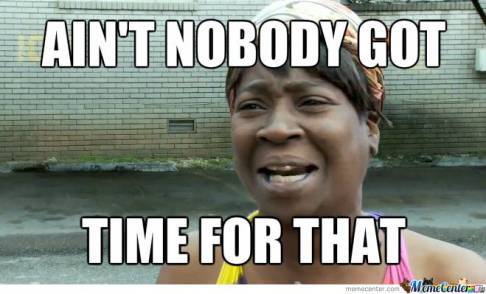
Writer SEO - Sweet Brown saying, ain't nobody got time for that, illustrating the concept of writer SEO
Preach, Sweet Brown.

We live in a hurry-up, impatient, “ain’t nobody got time for that” world. And a good 90% or more of us never bother with the second page of search results!

So, while positive changes in position are nothing to sneeze at, they do not truly matter unless you are on page 1 of results. AI will also be more likely to choose your site as a source if you do SEO right.

If that seems unfair, odd, and maybe even a reason why the human race is doomed, well, I am totally with ya on that.

Yet our preferences do not matter.

Ads Are Outta Control!

But… there is one problem with writer SEO or really any kind of SEO or AIO. We are all gunning for page 1. And that means that the competition is fierce.

I am talking about you, me, and large corporations with insanely big budgets. There are people who have been doing SEO since before it had a name (or at least it feels that way).  So, how do you compete?

An Itch for a Niche

Exxon is enormous! Their annual ad budget may very well be more than everything I have ever made in my life. And probably ever will.

But they are not competing in the writing space. Even if their CEO decided to write a book, they would not be my competition. And they might not even really be my competition if their CEO decides to try their hand at writing something in the exact same genre as me.

Is James Patterson my competition? Well, not exactly. Yes, we are both writers. But that is where the comparison stops. Now, Patterson does write science fiction. But are we really in direct competition? For one thing, a lot of his sci fi stuff is aimed at teens. Mine … is not.

So, maybe I do not have to worry about him, or at least not too much. Same with JK Rowling and Stephen King, particularly as they do not really write in my genre.

A Niche to Scratch

Amazon is great about having separate categories which match a ton of niches. Consider horror. Even if vampires, werewolves, wendigos, mummies, and serial killers were all in the same novel or film, so what? They all still have their own sub-niches (if you will) within horror.

Science fiction has a number of well-known niches:

• Space opera – this is like Star Trek. My novel The Enigman Cave fits this niche, as it is also following people on a spaceship.
† Dystopian – this is like Ready Player One. My novels Mettle and Untrustworthy both fit this niche, even though they are set in different places.

• Science fiction noir – this is like Blade Runner or I, Robot, where cops and science fiction mix. My Obolonk and Time Addicts trilogies both fit. This is not a large genre and Amazon does not have it as a filter. But the good news is that there might not be a lot of competition…
† Time travel – this is like the old TV show, The Time Tunnel. Time Addicts fits this niche.

• Historical science fiction – now, this one is tricky.

Issues with Historical Science Fiction

Science fiction is not normally set too far in the past. Even Stranger Things just goes back to the 1980s.

Without getting into Steampunk, one of the only examples I can think of are the films Time After Time (where HG Wells himself has to chase Jack the Ripper in the modern era) and Somewhere in Time (1970s playwright Richard Collier goes to the turn of the 20th century via hypnosis and falls in love with actress Elise McKenna).

In both stories, someone in the present is writing about the past. It makes sense that it would be a vehicle for a time travel story.

My Real Hub of the Universe trilogy fits this niche of a niche, which is so small that Amazon does not list it as a genre (although at least GoodReads does!). And looking it up often means you find science fiction books written earlier in history, such as The Island of Dr. Moreau.

As a result, when you put that kind of work onto Amazon or the like, your tags and keywords had better be pitch-perfect and utterly on point.

Your Writer Website and Your Niche(s)

I am not the only author who writes in more than one niche. In fact, many authors who do so will use a pen name or even several pen names.

So, for someone like me, writer SEO means looking at competition in all of these niches. And it means looking at the keywords which the more successful posts (the ones at the top of search, which do not necessarily belong to bestselling authors) are using.

Keyword Research for Writer SEO

People who do SEO for a living are researching keywords pretty much all the time. It is a fancy way of trying to determine what people are looking for. If you can give it to them, then you want them to be able to find you.

The closer what is on your website matches their search, the higher up (usually) your content will be in search engine results.

Google’s mission is to match seeker and website owner as closely as possible. Because if a person has a good experience with Google, they are more likely to use Google than, say, Bing.

As a result, Google can charge more for its advertising (and yes, unfortunately, paid ads are dominating the first page of search results. So page 2 can get some love after all—but never settle for anything lower).

AI is also looking for top-level stuff. A buried website is not very likely to be cited by AI.

Synonyms and Intent

To use an example a different form of art, consider film. Or cinema. AKA movies. Or pictures. AKA Hollywood or Bollywood or the Oscars or BAFTA awards, etc.

What is the difference in intent between these two searches:

† movie for kids not Disney
• classic cinema for children

Now, they both pull up lists of movies for the younger set. But the first is more likely to pull up articles about The Land Before Time, whereas the latter might pull up blog posts about The Red Balloon. Between the two searches, the first is more likely to pull up animation, too.

Now consider your books. I will use the Time Addicts trilogy as an example.

† time travel with robots
• science fiction noir in the far future

Both searches would fit this trilogy. The first gets a lot more hits. But the latter pulls up much more closely-related stuff. And if I change the first one to time travel with aliens (which would also fit Time Addicts), it gets me TV programs about ancient aliens.

What is a better set of keyword phrases (kwps) to target? Probably some mix of these:

† science fiction noir
• sci fi noir
† science fiction set in the far future
• time travel noir (although currently there are two kinds of returns on this search which are coming up a lot)

Writer SEO, Searches, and Your Buyer Persona

Who is your ideal reader? Your ideal customer? You have got to market directly to them. And you will need to write your blog and pages, etc. with that person in mind.

If your ideal reader did not finish high school, then a term like movies is more likely to work than cinema. And if your ideal reader is female, you may want to toss in terms like feminism or strong female character.

If your ideal reader is a member of the LGBTQ+ community, then you will need to use terms which will apply. But I would caution you to be careful here. Terms evolve quickly.

What was acceptable in 1999 is not necessarily going to fly in 2026 or later. And for God’s sake, don’t try to reclaim a slur unless you would be a subject of said slur. And even then?

Just, don’t.

Writer SEO: Takeaways

Like I said above, this barely scratches the surface. Try tools like Keywordtool.io, answerthepublic.com, and MarketMuse (or Surfer SEO, Ubersuggest, or AhRefs) for more advanced ways to better target your ideal reader.

Set this site as a preferred source

QR Code

Want More of Writer Website Development?

If my post on writer website SEO resonates with you, then please be sure to check out my other articles about how to create a writer website.

Writer Website Development

Start a Writer Website
How to Create a Writer Website: What to Write About
• Writer SEO

Writer Website Copyright
How to Create a Writer Website: Writer Website Design
Mobile Design

How to Create a Writer Website: Writer Website User Experience Design
Writer Website Speed and More UX Design
Next article

Get your author website going the smart way and use SEO! #amwriting

Leave a Comment

How to Create a Writer Website: What to Write About

It is the first question pretty much any writer would normally ask anyway, and it concerns what to write about on your website.

Do You Know What to Write About?

Let us start with one thing, and make it perfectly clear. Your writer website is (spoiler alert!) not your personal blog. Rather, it is a marketing tool.

Oh, and by the way, your Twitter stream (er, X stream), your author Facebook page and/or group, and BookTok? Guess what? They are marketing tools as well!

This is not to say that you can never, ever be sociable. Actually, you should.

But there is a line between sociable and confessional. For the most part (albeit not necessarily always), you do not want to cross it.

Consider What to Write About as You Consider Where that Writing is Actually Going

Wait, what?

What happens to your blog once you publish it? Well, you probably share it on social media. At least, if you want anyone to read it, you sure as hell do.

In fact, Jetpack has a setting to get your writing out to social media. It is pretty easy to set up and then it is done.

This is not everything you should be tweeting, etc. You should be doing more than the barest of bare minima. But at least your stellar prose is going somewhere.

A Writer Newsletter is the World’s Greatest Landing Strip

Keep in mind, as I write this, I do not even have a formal writer newsletter yet! But I follow the newsletters of some other writers, like Trinity Blacio. I look at what they say, and what they do not say. And, I check out how often they put out their newsletters.

And here is what I have learned.

1. Newsletters that come out irregularly are probably not going to get you new readers. But they may appeal to your current fans. Still, you want to expand your base. Being consistent with your release schedule helps!

2. No one seems to know what to put in a writer newsletter, beyond a link to a free download and/or future appearance info. Why not reprint a part of some blog posts? And then link to the remainder!

3. Confessional newsletters should be few and far between. So, an irregularly published one might be able to get away with this. But if this is a constant? Nope. A weekly newsletter, and maybe even a monthly one will get tiring very quickly if it is only about how you have got writer’s block. Again.

So, consider some of your landing strips when you write.

What do Your Readers Want to Read?

Beyond your fiction (or nonfiction), what do they want to know? Do they want to see anything about your process? Maybe they want to understand your characters better. Or maybe they want to get an idea of what is coming out next.

But when considering what to write about, you also want to get inside the heads of this next group of folks.

What do Your Prospective Readers Want to Read?

Love it or hate it, if you are an indie writer and you do not just want to leave your writing in a drawer or on a hard drive somewhere, guess what? Congratulations, you are now a small business person.

What does that mean? It means that you should be trying to convert prospects.

I am not talking about clickbait here (although a little copywriting is probably fine if it is not too aggressive). It is, rather, about trying to add some readers.

Here is a Fer-Instance

Any number of die-hard Trekkies were appalled and clutched their pearls when a new timeline and new actors were introduced in the 2009 film. However, that film did something amazing. It attracted and hooked a new generation of viewers.

And when Paramount+ (it was CBS All Access at the time) added new series which were different from TOS, what happened? Oh, those same fanboys and fangirls clutched their pearls and sighed and screamed it wasn ot “real” Star Trek.

Whatever the hell that is. Yet Discovery and the other new series have also reeled in a new generation.

Resting on your laurels is comfortable and nice. But it also makes you irrelevant very, very quickly.

Back to You for What to Write About

I know how hard it is for so many indie writers to market. Believe me, I know! Why the heck do you think I got a Masters in Communication to begin with? It was, in part, because I wanted to learn how to market my own creations.

Still, consider it this way.

You are a writer. Setting words to paper or pixels is in your DNA.

And you should also be an inventor and an experimenter.

So, throw some of that writing jello against the wall. Document it and measure it.

Who knows? Maybe some of it will even stick.

Happy writing!

Set this site as a preferred source

QR Code


Want More of Writer Website Development?

If my post on website content resonates with you, then please be sure to check out my other articles about how to create a writer website.

Writer Website Development

How to Create a Writer Website: Start a Writer Website
† What to Write About
Writer SEO
How to Create a Writer Website: Writer Website Copyright

How to Create a Writer Website: Writer Website Design
Mobile Design
How to Create a Writer Website: Writer Website User Experience Design
† How to Create a Writer Website: Writer Website Speed and More UX Design
Next article

Get going the smart way with what to write about. #amwriting

Leave a Comment

How to Create a Writer Website: Start a Writer Website

Do you want to start a writer website? Or have you heard that maybe you should? Then check out this post on getting going.

How Did I Start a Writer Website?

Me, personally? This blog and this site will not look or behave as perfectly as I think a writing website actually should. But that is okay, because my site has had other purposes in its history.

It has been about social media, my Masters degree, and even various job searches. So, there is older stuff in here. And there is nothing wrong with that.

Plus, I hope you will realize this means you can convert an older blog/website into one for writing. You do not have to throw out your older posts or domain and the like.

However, if your posts are too far off-topic, you may want to consider a new domain, or shunting your older blog to one. Or maybe just pulling your older posts and creating redirects for them.

A blog on handcrafting most likely would not lend itself to such a conversion. But a site or blog on SEO, social media, or education is probably fine. You make the call, sports fans.

What is Missing?

Oh, and make no mistake about it. I will be writing about things I still have not done yet! For the most part, that has been due to budget—either of my money or time or both (and mental bandwidth!).

This is the reality of being an independent writer. When you get it in your head to start a writer website, you may find your reach exceeds your grasp.

But you can (and should!) start a writer website anyway. Why? Because guess where you are going to build your brand? It is right here, folks.

Start a Writer Website by Actually Starting a Website

God lord, what the heck does that mean?

It means that just having a Facebook page or group is not going to cut it. BookTok is lovely, but it is not enough. Neither is a Bluesky (BookSky) account. Those things are absolutely helpful and they may even be vital.

But they are not an actual website.

Plus, not for nothing, but you should own your spot. Why? Because we used to think MySpace would last forever.

Own your stuff. And own your space. At the absolute minimum, keep copies of everything. Behave as if you could lose it all tomorrow. Because you just might.

Owning Your Space

This inevitably means hosting. You can buy hosting from providers like GoDaddy or HostGator, etc. Shop around and ask friends if you do not have a provider for some other site. If you are an utter novice, then ask around at work.

What if you are on an absolute budget of, like, $0? That makes this harder but not impossible. Because you can try a few things.

Medium and Substack

Both of these are popular, and that can make it hard to break through the noise. But some people do. Since you would not own the space, keep copies of everything. And, keep in mind, you will likely lose all comments if you transfer your work elsewhere.

If you do not break into Substack or Medium and do at all well, then you may or may not be able to improve the findability of your page. You are also beholden to their rules. Writers of erotica will probably find either platform to be far too constricting.

Wix or Weebly

Do not get me started.

Both offer freebie hosting and ways to start a writer website (or any other type of site, for that matter) easily.

However, your URL (for their free hosting) will be something like yoursite.weebly.com (which is long for business cards and bookmarks). Search might not be the greatest.

Plus, you are beholden, at least in part, to their designs and templates. If those are good enough for you, then have at it. And keep in mind, anything that is really pretty or functional might not be free.

You can, eventually, have Weebly or Wix host your domain and you would pay for that. And then others would probably never have to know.

But for serious flexibility, these are probably not going to be it.

Github

If you do not need a lot of instruction, this could work in a pinch. But it is really just going to allow for hosting a static page. A blog, for example, will change too much.

Wattpad

A decent place for hosting writing you are not planning on publishing for money, Wattpad is not a place for blogging. Also, anything too commercial will be pulled by the moderating staff. So much for selling stuff.

Want to Start a Writer Website? WordPress to the Rescue!

What is it, 48% of all websites are on WordPress? Their functionality is hard to beat. They have an enormous number of plugins and apps, both free and paid for.

Support varies and is mainly tied to app and plugin developers. If a developer provides good support, then awesome! But if not, then either get a different plugin or head to YouTube and pray for good tutorials.

If your budget is truly $0, you can even put a blog (and probably just a blog) onto their freebie pages. But those are numerous and with less support and functionality. But they will help you to get used to using the platform.

Still, eventually, you are going to have to cash in your empties and spend something or other.

The Planning You Will Need to Start a Writer Website

Welp, I originally just threw this one together.

And then I realized I wanted it to not look terrible. This was even before I was using it to tout writing, or even social media.

Really, really far back (as in over 20 years ago), I really just wanted a place to plonk some photos. Geocities was it.

As a result, this website and its accompanying blog have grown organically and not always intelligently.

You can head some of my mistakes off at the pass and do some preplanning. To wit.

Decide on a Basic Design Sensibility

You do not need to be a designer (and God knows I am not!) but you do want something that looks attractive and, at the same time, feels put together.

If, like me, your design sensibilities resemble those a semi-sapient sponge, then I suggest talking to someone you know who does have design chops. They do not have to be a professional.

This person could have maybe taken design classes in school. Or their living space always looks polished, or their look in clothing is always well-put together. At the barest minimum, it should be someone you know who does art of some sort, even for fun.

And if you really and truly know no one like this, then you have probably got a high school near you, yes? Talk to the art teachers there.

Here is what you want to know.

Ask Your Designer Friend the Following

A designer friend makes them sound like they come with a logo, but I digress.

I Love These Colors. Do They Go Together Well?

You can also check out any color wheel online, but if your monitor skews toward green (for example), you will not get a true result. Asking a human will help.

If You Were Working With These Colors, Which Would You Use as Primary? Which Would be the Accents?

You may love neon pink, but it is probably a bit much for a main color for a website.

I Normally Write in the ___ Genre. Which Colors Speak to You When You Think of That Genre? They Do not Have to be Any of the Colors I Have Chosen

Now, you should also look at covers (seriously). But what I am getting at here is what is called Color Theory.

For example, what does yellow make you think of? Pretty standard responses will probably include the sun, sunflowers, butter, egg yolks, Post-it notes, bananas, and canaries.

Does it remind you or your designer pal of any genre, though?

It is okay if it is not an oh my God perfect match. But there is a reason why a horror writer might have a website with darker colors and a Halloween feel to it regardless of the time of year.

And there is a reason a romance writer might start a writer website with pastels and mainly use a scroll-like font and floral images.

Given My Main Genre, What Would You Suggest as Ideas for a Logo or Other Predominant Image?

I really, really hope you will not use a stick of butter for your logo, even if you write cookbooks. But if you love yellow, and your genre is dystopian science fiction, you might consider an image of something burning.

My Own Design (Er, Maybe)

I made this logo (and a couple of others, which I will show in other posts) and I own the image!!

And that is important all by itself.

Do I love this logo? It is … okay.

The idea of books with different colors appeals to me because what I write is kind of eclectic.

But the books are all monochrome, almost looking like photo albums or research texts.

I do not like that the font ended up washed out. But I do like a font like this. It dovetails well with what I generally write, which is science fiction.

I know I can do better, and will probably play around with this some more another day. Again, mental bandwidth!

To Start a Writer Website — We Have Barely Scratched the Surface!

Yes, I will write more about this topic. But the main takeaways I am giving you today are:

1. Own your space if you can afford it.
2. Use WordPress! You will not regret it, I swear.
3. Get an idea of visual design before you get started, to keep a unified look.

See you around.

Set this site as a preferred source

QR Code


Want More of Writer Website Development?

If this post on website development resonates with you, then please be sure to check out my other articles about how to create a writer website.

Writer Website Development

How to Create a Writer Website: What to Write About
Writer SEO
How to Create a Writer Website: Writer Website Copyright
How to Create a Writer Website: Writer Website Design

Mobile Design
How to Create a Writer Website: Writer Website User Experience Design
† How to Create a Writer Website: Writer Website Speed and More UX Design
Next article

Start a writer website and get going the smart way! #amwriting

Leave a Comment

Facebook versus Forums

What hath Facebook wrought? – It’s a Facebook versus forums smackdown!

It is Time to Pit Facebook Versus Forums

Facebook, as anyone not living on a desert island knows, is a juggernaut of massive proportions. According to Oberlo, Facebook has over three billion users, and about 61% of global social media users—and these numbers are only climbing.

When it comes to parent company Meta (they also own Instagram, WhatsApp, Messenger, …), there are nearly four billion monthly active users.

Almost 54% of Facebook users identify as female. And, surprise surprise for anyone who thought it was just a platform for the (ahem) older set: nearly 62% of Facebook users are under the age of 45.

In 2026, that means people born in 1981 and later, AKA Gen X and later generations.

In contrast, according to Worldometers, 1.477 billion people live in India, and 1.413 billion live in China. Vietnam has a bit over 102 million in population. Laos has about 8 million.

Hence, Facebook usage is the entire population of India + the entire population of China + the entire populations of Vietnam and Laos. If these numbers do not blow you away, then check your pulse.

It is the 800 pound gorilla of the internet. And it is rapidly changing our interpersonal interactions, both on and offline. So, one of those areas is in the area of internet forums.

Facebook Versus Forums Sites Like Able2know

Facebook hits all forum sites and not just A2K. For years, I have been seeing drop off on a lot of different sites. It does not seem to matter whether they are large, generalized places like Able2know, or small niche sites devoted to something like Star Trek.

In addition, I hear about this same kind of drop off in other areas. Facebook has its fingers in a lot of pies, and it is only trying to get into more and more of them.

The truth is, Facebook has taken over certain niches which forums or smaller sites have tried to claim.

Such as class reunions. Why go to a separate website and register (or even pay!) when your buddies are all or nearly all on FB anyway? Why not just make a group devoted to the reunion and divvy up the labor?

Using Facebook to market your crowdfunding (it could be to bring an invention to market or pay for your dog’s eye surgery or help out a friend who lost everything in a house fire) is a no-brainer.

Looking for a bone marrow donor? Sure, go through the proper channels and the registry. But why not boost the signal by posting it on Facebook?

Everybody get in the Pool

So there are two generalized kinds of interactions (there are more, of course, but hear me out, okay?). One concerns the shallow end of things. You trade information about weather and generalized health inquiries. It’s political sound bites and the zippy pop song.

And much of what I have outlined above, like looking for a bone marrow donor, is mostly going to be the quick, shallow end of things. You are a yes or a no. You send a care react and maybe you repost. But you are not elbows deep in it. You are only pinkies deep, if that.

The other side of things is deeper. Because here is the in-depth political discussion where you really get to the heart of the issues. It is the detailed information on a health condition or even how to make a soufflé or plant an herb garden. It is the symphony.

And online, just like offline, it is a far rarer bird.

For you need time to develop that kind of trust. Furthermore, truly, you have to devote some time in order to have such a conversation in the first place.

In our bone marrow example, you can often find communities of like-minded individuals on Facebook. A small, private group may be able to help with more than a signal boost and expressing their concern. But that is a small bit of the vast sea that is Facebook.

Swimming with Facebook

Facebook fulfills the shallow end of online interactions extremely well. It is very, very easy to catch up on a superficial level with high school classmates or the like. A Star Wars groups, for example, might ask basic questions like “Who was the best villain?”

George Takei has mastered these kinds of interactions (although, in all fairness, he also writes occasional longer notes). Because these constitute the quick hits that people can like and share, all in the space of less than a quarter of a minute.

It works very well for mass quantities of information. And, in a way, this is why Reels and TikTok are so massive. They are quick hits.

Facebook versus Forums – Where Facebook Wins

Topics about a favorite song go better on Facebook than on forums as they are a quick hit and posting YouTube videos is simple. It is colorful and, just as importantly, it is pretty easy to pick and choose when it comes to interactions there, despite changes in privacy settings.

Other basic interactions (remember a/s/l?) are seamless or do not need to happen at all. Partly this happens due to the Facebook real names policy. Also, more people tend to use their real photograph and their real (generalized) location and age than not.

But there are also always going to be people who are going to check. Or they are just plain being nosy. For some, it may even be a poorly-conceived cover for transphobia. E. g. are you really female?

Facebook versus Forums – Where Forums Can Still Win

But what Facebook does not do so well is the deeper end of interactions (the extensive political discussions, etc.). Also, it often does not do them well for a larger group of people or over a significant period of time or for a longer or wider discussion.

And apart from a small group of people fighting the same medical battle (on their own behalf, or a loved one’s), there are not a lot of occasions for the long-term, deeper talk.

As a result, just about all of the deep discussions go unsaid. Topics about elections outside the United States (particularly if Americans participate in said topics) are handled poorly, if at all.

When it comes to the deeper end of the interactions pool, Facebook is just not a good place for that at all. Another consideration: even now, a lot of people still find that Facebook moves too quickly for them.

Swimming with Forums

For the deep end, it makes sense to collect into forums. You need to get to the heart of the matter. And that takes time, a luxury that Facebook often does not afford, as it scrolls by in a blur.

Instead of mass quantities, forums can fulfill a very different niche by instead concentrating on quality interactions. Forums offer, even for people who use their real names and are fairly transparent about their interactions, a chance to use a persona.

This is because Facebook far too closely parallels to our real lives. There is just so much posturing you can do about being a famous rock star when your high school cronies are also there, and they remember holding your head when you had your first beer.

Again, the best way that Facebook even attempts to emulate this is in groups. But if you are using the same login, you will be found out. You get no chance to put on a persona hat, even for a moment. The jig is immediately and irrevocably up.

The Endless Online Christmas Brag Letter

And Facebook, while it can be a refuge for people to truly show they care for each other (in particular, in the groups, or using notes or chat), is more often a place where people instead get a chance to preen and show off.

Like something? Then hit like! Don’t like it? Then either scroll past it or click to hide it, or even report it as spam or as being threatening.

Hell, you can even @ a tag group to comment on it.

And apart from the latter two actions, the person posting the image, anecdote, status, etc. is none the wiser when it comes to your reaction, particularly if there are a lot of reactions.

If you have a million reactions on a post, and 150,000 of them are anger reactions, how do you know your old college roommate was one of those people? Unless you have the patience and the hyperfixation to check, you are never going to know.

But with the forums, even if you do not use your real name, your opinions are still out there, for all to see, whether it is about global warming or the Designated Hitter rule.

Facebook versus Forums: the Future

My crystal ball says Facebook is only going to get larger and more complicated. And advertising and other ways of keeping forums open is only going to get harder.

Unless Facebook finds a way to take a deep dive into topics – and make it easier for people to find their way back after a day or two – then I fear a form of interaction may eventually be lost forever.

That is, unless Zoom calls and the like can rise to such a challenge. In and among the fluff and Zoom bombing and other annoyances and weirdness, perhaps that is the way to go. Because I fear that traditional forums are going to bite the dust before 2030, if not sooner.

Although Substack will most likely continue to rise, and will probably replace most forums, even though it is a different type of interaction.

There is room for both types of interactions. Facebook versus forums does not have to pick a winner. The internet is a mighty big tent. But economics and sheer numbers might award a prize anyway.

Good luck!


Set this site as a preferred source

QR Code

Want More About Facebook?

If my experiences with Facebook resonate with you, then please be sure to check out my other blog posts about the largest social network on the planet, by far.

… And Facebook for All

Creating a Facebook page
Working with a Facebook Page
… Your Profile Page

Offsite Sharing
All Your Account Settings
All the Rest of It

Next blog post

1 Comment