I love making characters and, if the planets align and I’ve done it right, then they come alive and leap from the page. They become real to you.
What’s All this About Characters?
And, just in case I mess up and my characters do not feel real to you? Then please feel free to contact me and hold my feet to the fire. Er, figuratively.
Seriously.
If have messed up, then tell me.
And if my characters feel good and real and true to you, then I hope you will let me know that as well!
So, here are some observations about them.
Faves
Who are my favorite creations?
Craig Firenze — the Force of Nature
Craig is a trip to write because every other word is a swear word. While all of the characters in Mettle have potty mouths, he takes it to an extreme.
I mean, why do you think the first word anyone says in that book is his—and it’s an f-bomb?
Peri Martin — the Snarky Author Stand-in
While all of my characters are me to some extent, Peri is my snarky best. But I was never as reckless as she is.
Er, was I? Hmm.
MJ Tanner — the Animal Whisperer in a Miniskirt
Mary Jacqueline Tanner is thirteen years older than me and is as much a product of the ’60s as anyone could be in tiny Broken Arrow, Oklahoma.
And while {spoiler alert!} she does fall in love, the biggest relationship she has in The Duck in the Seat Cushion is with her beloved Snowy, the stray mostly Airedale terrier who she and her brother Sid find one day and take home.
Ceilidh O’Malley — the Fan Favorite
People love Ceilidh and I think they’ve got the right idea. I don’t think I have another character who went on such a journey. When you first see her, she is at her absolute lowest in life.
It was great fun to write her prequel. I hope readers come away with a greater appreciation of what she went through, but also of her mother’s motivations.
Tommy 2000 — the Plastic and Polymer Hero
How do you make a robot humanish but not turn him into a latter-day Pinocchio? I hope I’ve done Tommy some justice.
Ixalla — the Alien Revolutionary
One of the conceits of Untrustworthy is that no one in it is human. Ixalla wasn’t even originally going to be as big a character as she turned out to be. Ixalla became a voice for freedom. And I like that about her.
Trixie LaRue the Favorite Secondary/Sidekick
From her gol-darn Kentucky accent (based on my BFF’s mom, with love to Mrs. P) to her cougarish ways, to her loving friendships, to her radical competency, Patricia Louise LaRue is a kick to write and should be anyone’s ride or die.
Takeaways
Making characters is one of the most fun parts of writing fiction. Don’t let anyone ever tell you otherwise.
A Look at Writing Fiction About Early Boomers (1946 – 1953)
I prefer to split the Baby Boomer generation, as I feel there’s a marked difference between this group and the latter half (Generation Jones). When writing fiction about Early Boomers, it makes sense to lean into the 60s. But there’s more to this group than flower power.
And now, let’s look at some pivotal moments, to help inform us when writing fiction about Early Boomers.
Early Boomers Turn 18 (1964 – 1971)
This time frame starts off with the US Surgeon General declaring that smoking may be hazardous to one’s health. The the US government authorizes the 24th Amendment, thereby outlawing the poll tax.
The first computer program written in BASIC is run. And the first student protests against the Vietnam War happen while the Civil Rights Act of 1964 is passed.
The Vietnam War dominates the middle of this period. Many other student protests follow the ones in 1964.
By the time this period ends, Charles Manson and three of his followers (Susan Atkins, Patricia Krenwinkel, and Leslie Van Houten) are convicted in the Tate-LaBianca murders. The UK and Ireland switch to a decimal-based currency.
And Led Zepellin performs Stairway to Heaven in concert for the first time, in Belfast.
Early Boomers Turn 25 (1971 – 1978)
This time frame starts off with the founding of NASDAQ and Satchel Paige being voted into the Baseball Hall of Fame. And there’s the founding of Starbucks, in Washington state.
The Watergate scandal and its aftermath dominate the middle of this period.
By the time this period ends, the Blizzard of ’78 hits New York and New England, killing about 100 people. The world’s first test tube baby, Louise Brown, is born in the UK. Pope John Paul II becomes the 264th pope.
The First Half of the Baby Boomer Generation Turns 35 (1981 – 1998)
This time frame starts off with Iran releasing the 52 American hostages it had held for 444 days, just after the swearing in of Ronald Reagan as president of the United States. The first successful flight of a space shuttle happens (it’s the Columbia).
And the CDC reports that five homosexual men in Los Angeles have a rare form of pneumonia only seen in people with weakened immune systems. This is the first documented report of HIV.
Everything from bombings by the Unabomber to scientists discovering the hole in the ozone dominates the middle of this period.
By the time this period ends, the Drudge Report breaks the news of the Clinton-Lewinsky affair, and there’s the founding of Google.
Early Boomers Turn 65 (2011 – 2018)
This time frame starts off with Kim Jong Un succeeding to the leadership of North Korea upon the death of his father, Prince William and Catherine Middleton wed, and President Obama announces the killing of Osama bin Laden.
Unrest in the Middle East and Africa dominates the middle of this period.
By the time this period ends, seventeen high school students are killed at the Marjory Stoneman Douglas school in Parkland, Florida. Also, Prince Harry and Meghan Markle wed; Canada legalizes the recreational use of cannabis; and Saudi Arabia allows women to drive.
From 1946 to 1953, the top five names for both boys and girls are surprisingly consistent.
For boys, the top 3 are identical for every year but the last one. For the first seven years of the cohort, the top 3 boys’ names are James, Robert, and John. But in the final year, that changes to Robert, James, and Michael.
Interestingly enough, the name in fourth place is William for the first four years, Michael for the next three, and then John in the last year.
The fifth-place boy name varies the most. In the first two years, it’s Richard. In 1949, it’s Michael. Otherwise, it’s David.
The girls see their own changes, with Mary only taking the top slot in, oddly enough, the first and last years. Otherwise, the top girls’ name is Linda. Whenever Linda is #1, Mary is #2, and vice versa.
Patricia sits in the third spot every year but the last one, when that name comes in fourth. In 1953, the #3 girls’ name was Deborah. Barbara holds the #4 spot four times, in 1946, 1947, 1949, and 1950. Patricia holds this spot in 1948 and 1953. The other two years, it’s Deborah.
For the #5 spot for girls, it’s Carol in 1945, Sandra in 1946, and Barbara in 1951. Otherwise, it’s Susan all the way.
When I’m Writing Fiction About Early Boomers
So, here are my characters from the Early Baby Boomers cohort.
The Duck in the Seat Cushion is all over this cohort. There’s Sid Tanner, born in 1946, and main character MJ Tanner. She’s born in 1949. All of their classmates, and both of their spouses also belong to this group.
MJ and Sid’s stepbrother, Hal Brown, also has a birthdate during this time frame.
Any of these characters could be the POV character in a short story such as Failure.
Takeaways for Writing Fiction About Early Boomers
While the 60s are a truly pivotal time for early baby boomers, they’ve done a lot since then. Their sheer size has made them the 900 pound gorilla in a lot of spaces.
So, when writing about Early Boomers, don’t stop with 1969 or with ok boomer cliches. The first half of the Baby Boom cohort is more than that.
My parents are/were members of the Silent Generation, and they have inspired me when it comes to writing fiction about the Silent Generation.
The Silent Generation (1928 – 1945)
When writing fiction about the Silent Generation, the Second World War isn’t quite as dominant as it is for their forebears in the Greatest Generation. It’s more of its aftermath, and the lead up to the Vietnam War that color their lives.
In addition, they deal with the fallout from the Great Depression, and may have a scarcity mindset, even decades later.
Yes, I Have Written Fiction About the Silent Generation!
Or, rather, for the most part, about just one particular person. I originally wrote Mettle with 2020 in mind as its temporal setting.
While that exact year isn’t really feasible anymore, due to the pandemic (and due to the year having come and gone already), I will still use 2020 as the second year without a summer until I decide on something else.
Because Eleanor Braverman is in her seventies for that book, she fits perfectly into the real-life Silent Generation. I give her a birthdate in 1938. Her parents may even have chosen her name due to admiration for First Lady Eleanor Roosevelt.
And now, let’s look at some pivotal moments, to help inform us when writing fiction about the Silent Generation.
The Silent Generation Turns 18 (1946 – 1963)
When this time frame starts, the United Nations and the UN Security Council hold their first meetings. The ENIAC computer is unveiled. And Winston Churchill gives a speech about the Iron Curtain.
The Silent Generation Turns 25 (1953 – 1970)
This time frame starts off with over 70% of all TV sets tuned into I Love Lucy, to watch Lucy give birth to Little Ricky.
Also in 1953, Stalin dies, and Jonas Salk announces the development of his polio vaccine. Julius and Ethel Rosenberg are executed. In addition, Christine Jorgensen comes back to New York after receiving successful sex reassignment surgery in Denmark.
The war in Vietnam dominates the middle of this period. However, many of the men in the Silent Generation are too old to take part (or at least be subject to the draft) once the United States enters the war in earnest.
In 1964, at the time of the Gulf of Tonkin resolution, the oldest members of this generation were in their mid-thirties.
By the time this period ends, Apollo 13 barely makes it back to earth, there are shootings at Kent State, and Jimi Hendrix dies of an overdoes. The Beatles break up.
The Silent Generation Turns 35 (1963 – 1980)
This time frame starts off with Patsy Cline being killed in a plane crash and Tito being declared president for life in Yugoslavia. Martin Luther King, jr. issues his Letter from Birmingham Jail. The Mercury space program ends.
And of course the most significant event by far is the assassination of JFK.
JFK’s death and its aftermath, the Vietnam War, and pretty much everything we think of when we think of the 60s dominate the middle of this period.
By the time this period ends, the US Olympic hockey team wins the ‘Miracle on Ice’, Reagan becomes president, and John Lennon is murdered.
The Silent Generation Turns 65 (1993 – 2010)
This time frame starts off as Czechoslovakia is dissolved, the World Trade Center in New York is bombed for the first time, and the Branch Davidian standoff in Waco, Texas results in the deaths of over seventy people, including cult leader David Koresh.
The events surrounding 9/11 dominate the middle of this time frame.
By the time this period ends, Wikileaks releases confidential government information to the general public. The Deepwater Horizon oil drilling platform explodes, and there’s the launch of Instagram.
Naming Your Silent Generation Characters
In the United States, the Social Security Administration keeps track of births and of what people name their children. I’ve already covered the 1920s in my post on the Greatest Generation, so please see the link below for that information.
In the 1930s, the top five names for girls get a bit of a shakeup. While Mary remains the queen at #1, Betty has slid into second place. Barbara appears at #3, Shirley at #4, and Patricia at #5.
Why Shirley? Shirley Temple, of course! Barbara is probably for Barbara Stanwyck. But where does Patricia come from? Hmm.
Boys, on the other hand, get a near instant replay from the 1920s. The top five names for boys were Robert, James, John, William, and Charles.
Then in the 1940s, Shirley and Betty are gone from the top five (they’re at #14 and #11, respectively). Mary still holds her throne (with apparently a grip of iron!) but upstarts Linda and Carol come in second and fifth. Barbara is still #3, and Patricia is up to fourth place.
On the boys’ side, James takes the crown from Robert (now at #2). John and William remain at third and fourth. But Charles loses fifth place to Richard. Don’t worry; Charles, as in the current King of England, is in seventh place.
Here and Now
As of the writing of this blog post (late 2024), the oldest people in this cohort are pushing 100. And the youngest are turning 80. While there’s certainly some differences between these two age extremes, the bottom line is that everyone in this generation is way, way past middle age.
And many are transitioning from young-old to old-old, if they’re not there already.
When I’m Writing Fiction About the Silent Generation
So, here are my characters from the Silent Generation.
Apart from Eleanor Braverman, there are Graceanne Davis Mason Brown Tanner, and Susan Tanner (Aunt Suzie). Plus, there are three additional Tanner siblings who don’t reach adulthood, all from The Duck in the Seat Cushion.
Takeaways for Writing Fiction About the Silent Generation
When writing fiction about the Silent Generation, keep in mind that they have seen a lot! They’ve gone from silent films to Instagram.
Want more about writing fiction about current generations?
I have one piece where I was mainly writing fiction about the Greatest Generation. It’s a short story called Three Minutes Back in Time.
The Greatest Generation’s earlier years are dominated by the Great Depression and the Second World War. When writing fiction about the Greatest Generation, particularly when writing about them as younger people, you really can’t avoid WWII.
And for characters from the Midwest, you should be at least mentioning the Dust Bowl.
Fact and Fiction About The Greatest Generation or GI Generation (1901 – 1927)
Every generation consists of a range of years, and some ranges will have more going on in them than others. Of course! Therefore, this information is meant to cover some of the bigger changes and news stories from the time.
If you think I’ve missed something big, feel free to let me know in the comments.
These events are mainly going to be America-centric or at least from a US POV. There is a lot more to the world than the United States, but I didn’t want to write a novel-length blog post!
So, let’s look at some pivotal moments, to help inform us when writing fiction about the Greatest Generation.
The GI Generation Turns 18 (1919 – 1945)
Of course, the two biggest events during this time frame are the Great Depression and the Second World War. And given when the oldest people in this generation turn 18, WWII looms extremely large for this group. Particularly because these people just missed fighting in WWI.
But there were plenty of other events during this time frame. For example, in 1919, this time period starts off with a bang as Prohibition begins in the United States. Also in 1919, Congress passes the Nineteenth Amendment, granting women the right to vote.
This time frame ends with two major events—the end of the Second World War and the death of President Franklin D. Roosevelt.
His successor, Harry S. Truman, drops the atomic bomb on Japanese cities Hiroshima and Nagasaki, the only time nuclear weapons have been used in combat. So far.
The Greatest Generation Turns 25 (1926 – 1952)
As this time frame begins, Gertrude Ederle swims the English Channel. And a newfangled technology called television is first demonstrated.
Naturally, WWII and the Great Depression dominate the middle of this period.
And as this time period concludes, Queen Elizabeth II succeeds her father. In the following year she will be crowned Queen of England. Evita Peron dies.
The first hydrogen bomb is detonated, and Anne Frank’s The Diary of a Young Girlis published in an English language translation.
The GI Generation Turns 35 (1936 – 1962)
As this time period starts, so do the Berlin Olympic games. This is also the year when King Edward VIII abdicates the British throne.
As before, the dominant event of the time is the Second World War.
This time frame concludes with the Cuban Missile Crisis, JFK announces that the United States will go to the moon, and Marilyn Monroe dies.
The Greatest Generation Turns 65 (1966 – 1995)
When this time frame starts, Leonid Brezhnev becomes the leader of the Soviet Union, the Beatles play in Candlestick Park in San Francisco in their final live touring concert, and people celebrate the first Kwaanzaa.
The Vietnam War and its aftermath dominate this time period. Operation Desert Storm happens toward the end of this time frame.
By the time this period ends, Timothy McVeigh and Terry Nichols have bombed the Alfred P. Murrah building in Oklahoma City, and President Clinton announces the resumption of relations between the United States and Vietnam.
And former professional football player OJ Simpson is tried for the murder of Nicole Brown Simpson and Ronald Goldman.
Naming characters in the Greatest Generation
According to the US Social Security Administration, the five most popular names for boys in the 1900s were John, William, James, George, and Charles. Girls? Their five most popular names were Mary, Helen, Margaret, Anna, and Ruth.
Ten years later, the top three for boys, and the top two for girls, don’t change. For boys, the fourth and fifth most popular names were Robert and Joseph. Rounding out the list for the girls are Dorothy (guess why!), Margaret (slipping a notch), and Ruth.
For the twenties, Robert takes over, surpassing even John (second place)! And how many of those men are called Bob, rather than Rob? The rest of the list for boys is James, William, and Charles. Joe, we hardly knew ye.
As for the girls, Mary continues to reign as queen, with Dorothy nipping at her heels. Helen returns at #3, and suddenly Betty appears at #4. Margaret manages to hang on, at #5.
When I’m Writing Fiction About the Greatest Generation
So, here are my characters from the Greatest Generation. Apart from Rosemary Parker and James Warren, a grandfather of Dr. Mei-Lin Quan from Mettle is born in 1926. Mei-Lin recalls him still referring to Taiwan as Formosa. The island’s name officially changed in 1949.
In addition, in The Duck in the Seat Cushion, main character MJ Tanner’s father, Walter Tanner, is born in 1924. Five of his nine siblings are born before him and they all perish before reaching maturity. Another two born after him also fit in the generation and die young.
Walt’s two other siblings are born too late for this generation. As one of just two of his parents’ ten children, and a survivor of the Great Depression and the Dust Bowl, Walt is a defeatist at times, but also down to earth and practical.
Takeaways for Writing Fiction About the Greatest Generation
When writing fiction about the Greatest Generation, the two world wars are like the elephants in the room. The second more than the first, but these people were teenagers during the Great War. So, don’t forget about it.
When writing them later in life, keep in mind that they need to adjust their way of thinking to the Computer Age at a rather late age, often in their forties or older.
Unlike for many later generations, computers and the internet are not second nature, and these folks may even resent those technological advances.
Want more about writing fiction about current generations? Then please be sure to check out my thoughts on multigenerational fiction writing and the other blog posts in this series:
Consider Frances Miller Ashford, One of My Original Characters
Who is Frances Miller Ashford? And just why, exactly, does she matter to the story?
When Ceilidh gets a job to work for the Edwards, the first thing readers should notice is: it’s a really big house. There are obviously going to be other people working there. Lots and lots of them!
If you have ever watched Downton Abbey or Upstairs, Downstairs, then you know exactly what I mean.
But at the same time, I knew that not everyone would know the nuances of Victorian era living. Plus, I needed to have a good way to get across the look and feel of the Edwards House.
There would have to be a character who would, at least in part, behave as a kind of expository mouthpiece.
Enter Frances.
Margaret Qualley, who I see as Frances Miller. Image is intended for reference purposes only.
Where Did Frances Miller Ashford Come From?
I wanted very much to have an immigrant much like Ceilidh but better settled in the story.
Also, I needed for Ceilidh to have someone she could talk to. Frances fills the bill rather nicely in both areas. Furthermore, I love the idea of exploring a female friendship like this.
Further, I needed Ceilidh to have someone who had an English accent she could emulate. It didn’t seem realistic to have Ceilidh remember Captain Underwood perfectly for years. But Frances was a lot more plausible.
Originally, her last name was Marshall, but then I had too many scenes with a character named Barry Marsh. The names were starting to get confusing. And I could not change Marsh’s name, as he was named after someone I know.
Hence, Frances got a slight tweak. I also like the newer name better, because it flows much better with her (spoiler alert!) married name.
The Past is Prologue — Backstory for Frances Miller Ashford
An orphan who never knew her family, I never actually wrote about her extremely early life. But Frances could have been the child of people who died—perhaps of any of the many diseases flying around Britain at the time.
Or she could have been the child of an unwed mother, left at a church or even the orphanage where she grew up. Her mother could have even been a prostitute.
I don’t see her as a female Oliver Twist, the child who’s in the orphanage but should have been raised by their own wealthy family.
No. Frances was to be a real foundling, with a hard beginning. For an almost traditional look at someone who raised themselves up from their bootstraps, she is the one to look to.
Was Frances Originally Jewish?
The more I read about the Manchester Jewish Board of Guardians, the more I wonder if I could make her a Jewish child. Conversion of orphans in orphanages appears to have been pretty common at the time.
The Board of Guardians is developed in 1859, though, and I put her birth at 1858. But this can work for the story line.
So, prior to the creation of an appropriate orphanage to place a Jewish child in, the possibility is high that such a foundling would be put in a non-Jewish orphanage.
For a very young baby, which Frances would be, there really wouldn’t be anyone to object to someone just quietly baptizing her. But then again, who would ask about her ‘real’ origin, who would find out?
And why would it matter to them? It feels like a secret for the sake of having a secret. Which isn’t a good enough reason to include it. Ah, well.
Coming to America
In keeping with what really happened to some people, I wanted Frances to have kind of gotten to Boston in a roundabout way. Ceilidh means to go to Boston. But Frances? Not necessarily.
As she got older, the orphanage was clearly going to toss someone like her out on her ear. The orphanage wouldn’t necessarily care if she ended up working, married, turning tricks, or dead. They would simply want her bed for some other, younger child.
And so I decided there would be someone who would come and promise the older girls husbands if they left the country. This would be an irresistible offer for not only someone like Frances, but also for many other young girls like her and the orphanage itself.
But when they arrive in the United States, there are no waiting husbands. The promise was a false one. And so, rather, Frances and her cohorts become Lowell Girls, working for a mill in the area.
After she bides her time, eventually, she gets a day off and ventures into the big city of Boston. Frances has many advantages: a pleasant voice and demeanor, a high class-sounding accent to someone like Mrs. Edwards, and a willingness to work hard.
As a result, Frances gets a job in the scullery. She doesn’t keep in touch with the other girls, and has no idea what happened to them.
Her rise is slow, deliberate, and patient. I want it to feel believable. Frances knows the world does not owe her a living.
Frances Miller Ashford, a Description
So, Frances has dark eyes and dark brown curls. I always hear her as having a somewhat breathy voice. Her British accent is via Manchester. It is the kind of accent Americans generally think of when we think of British accents. Posh accents, that is.
She is not cockney and is not some latter-day Eliza Doolittle.
I recently decided on actress Margaret Qualley to be the face of Frances Miller. It was a bonus that Qualley appeared in a show called Maid!
The idea behind Frances is that she almost blends into the background in the beginning. But, of course, she ends up being a lot bigger and more important than that. Ceilidh is a big part of Frances coming into her own as, of course, Gregory Ashford is, too.
Quotes
Coming from Ballyvaughan, Ceilidh has never used indoor plumbing before. In this scene, Frances explains what to do: ~
Frances lifted the lid, and showed Ceilidh there was a lacquered wooden seat. “Now here’s all you do, see. You lift the lid like so and let it rest against the back here, see? And then you gather your skirts or your nightgown up and sit down, facing the back.”
“Right, yes, I see.”
“And you do your business, of course. Then you take a sheet of these papers and use it cleanse yourself.”
“What do you do with the paper afterwards?”
“You place it into the bowl, where you just did your business.”
“And then what do you do?”
“You see the lever, and the little frog pull?”
“Yes, ‘tis rather amusing.”
“You pull once and hold it for as long as it takes in your head, to say,” Frances giggled a little, “God Save the Queen.”
“Truly?”
“Truly!”
Relationships
Frances has two main relationships.
Plumber’s Assistant Gregory Ashford
Her romantic one is with her husband, Gregory Ashford. They meet when the plumber is called in, to clear away a clog in the bathroom shared by all the women servants. Gregory is the assistant. While fixing the toilet, he and Ceilidh talk a little. He asks her, “Who is the vision?”
Ceilidh asks for clarification, and he says the vision has brown curls. Ceilidh makes sure to tell Gregory that Frances is Miss Frances Miller.
For Frances, Gregory is utterly unexpected. She and Ceilidh are what anyone of the time would have called old maids. While Frances has always wished and hoped for a family, she is a practical person at heart. Her dreams of love would not necessarily come true.
And so Gregory is a pleasant surprise. He is also kind and gentle and truly cares for her. Frances gets a middle class life, and that is perfect for her.
Ceilidh O’Malley
The only other relationship (really) for Frances is her close friendship with Ceilidh. When Ceilidh arrives, unsure of whether she’ll get work, Frances is the one to help Ceilidh along and assure she gets a job as a scullery maid. Frances wants a friend, someone she can talk to.
No one else in the Edwards household can fill that need for her.
And so Frances kind of puts her thumb on the scale and rigs Ceilidh’s test to be hired. Without Frances and her help, Ceilidh would not have gotten such a good job. And certainly nowhere near as quickly.
The truest of friends, Ceilidh convinces Frances to give Gregory a chance, because plumbers will always have work, so she’ll never starve. Coming from grinding poverty, that’s an enormous plus, so far as Ceilidh is concerned.
The biggest bonus is when Gregory turns out not only to be all right, but to truly be an almost (this is the 1870s and 1880s we’re talking about) equal partner.
Other Servants
Just like Ceilidh and other women of the time, Frances is a victim of what today we would refer to as sexual harassment.
Donald Smith is nasty to everyone, and he leers at virtually every woman he sees. This comes to a stop when Gregory finally steps in and makes it clear that Frances is his girl. At least Donald backs off.
With the other servants, Frances is cordial but not overly friendly. There is nothing about the woman who Ceilidh ends up replacing. I never mention her by name, and neither does Frances. And so I feel we can conclude that the two women were not too terribly close.
Conflict and Turning Point
In the first book, The Real Hub of the Universe, the conflict and turning point for Frances are nearly the same as those for Ceilidh. Without getting too far into spoiler territory, the real issue is that both Ceilidh and Frances could have lost everything.
When Judge Lowell helps out, Frances realizes she’s come from nothing, but has come to have powerful friends.
Her gratitude goes beyond measure. She will do nearly anything to return the favor that’s been granted to her.
By the time the series ends, she has achieved a great deal of the middle class dream. In particular, in comparison to someone like the wealthy Margery Cabot Edwards, Frances has true happiness.
Continuity/Easter Eggs
Gregory’s Brighton, Massachusetts house ties in with, of all things, Mettle. It’s just down the street from the house where Craig and Mei-Lin find the solar panels—about 140 years later.
Also, as an expository character, she aligns somewhat with Ixalla from Untrustworthy. But only a little. Ixalla, after all, is well-educated. Frances, while she can ostensibly read and write, has what is likely what we would call dyslexic today.
Also, her name ties her directly to Josie James’s sixth-eldest sibling, Frances Farrah James Walsh.
But Francie is a professional ballerina, and has a divorce in her past. She shares custody of her daughter, Gina, with her ex-husband, Clayton. Francie Walsh lives on Titania, a Uranian moon. Her ex has main custody of Gina and they live on another Uranian moon, Umbriel.
And so Frances and Francie really just share a name, but nothing else.
Future Plans
I don’t really have future places for her, simply because the series is done. But never say never, for I did write a few short one-offs with her, Ceilidh, Gregory, and Devon. She may very well turn up again. Here’s hoping!
There are also enough hints that there could very well be a sequel series if I ever get a true plot together…
Frances as an old woman could be truly compelling. With her birth in 1858, she could conceivably live into the 1930s. Without it being too much of a stretch, that is. Her earlier, harder life could even give her an advantage during the Great Depression.
But she would still be about seventy-one when it starts, and that’s pretty old for that era. For a person with a difficult early life, even a survivor like Frances Miller Ashford might not live past her sixties, if that.
Frances Miller Ashford: Takeaways
Every main character needs a sidekick, a kind of bounce off person. Frances is that type of character. This survivor, against all odds, is still sweet and charming. This makes her one of the more optimistic characters I have ever written.
Frances Miller Ashford — because so many main characters need a true best friend.
Want More of Frances Miller Ashford?
If Frances resonates with you, then please check out my other articles about them, Ceilidh, Johnny, Devon, Frances, and everyone else as they work to prevent an alien war from destroying human civilization by way of collateral damage.
Consider Rachel Gifford, One of My Original Characters
So, who is Rachel Gifford?
The exceptionally wealthy head of one of the biggest robotics companies in the Solar System, Rachel’s got … issues. For one, she’s horribly prejudiced against the relatively newcomer aliens in society, the Obolonks. But she is also running a company which she has no real business (heh) doing so. She’s not a leader. Yet she is thrust into a leadership role all the same.
Her own personal dissatisfaction stems from a number of things (see below), and a lot are of her own making. Yet, being the speciesist that she is, she pins a lot of her troubles on the orange folks who are not human.
You would think that her wealth would isolate her. But money can’t buy her solutions, not really—she wants action.
Where Did Rachel Gifford Come From?
In order to get anywhere, the antagonist had to have access to money. A lot of money, like ridiculous peak Michael Jackson or Tom Cruise or Oprah Winfrey wealth. Money where you can buy a private island or three, if you like.
I also needed a motive for them. Enter Rachel.
The Past is Prologue — Backstory for Rachel Gifford
Just before and during the events of the first Obolonk trilogy, Rachel’s mother, Camille Gifford, starts to exhibit the signs of Lewy Body dementia. I chose this diagnosis after Robin Williams’s suicide and the revelation that he had it. But it also serves a rather specific purpose.
Why? Because it’s a disease with delusions and paranoia, manifesting at the start of its progression. It’s also inheritable.
But back to Camille and Rachel. Rachel’s really just an engineer. But she gets thrust into Camille’s role—CEO—without enough preparation. And with very little desire to be in that role in the first place.
At the same time, she starts to become a victim of cyberbullying. Rachel puts all of this together and to her it spells an attack by Obolonks. With this kind of fuel for her prejudice—which isn’t exactly uncommon during this time period—she decides that the Obolonk people as a whole need to leave, and collectively pay the price for, well, being mean to her, more than anything else.
Do motives have to be highfaluting and complex? Do they need to be proportional to a villain’s reactions and plans?
Of course not.
Description
Mousy and slender, Rachel is a wealthy woman and an engineer/CEO. But she’s still not much for public speaking or the like. So, essentially, she’s the kind of woman in a twinset, sensible flats, and a gray tweed skirt who you might find at a meeting of the Junior League. She’s also someone who can quickly write a check if she decides to endow a hospital wing or college dormitory.
I don’t have an actress analog for her look. But I figure that’s all right. After all, even Nicole Kidman can get a mousy look with the right makeup, posture, lines, and gestures.
Given that Rachel is in her fifties or early sixties, I would be looking for an actress more or less within their age range if I really wanted to discover an analog.
Purpose/Theme/Motivation
In The Obolonk Murders, anti-Obolonk prejudice is widespread enough that Rachel can find plenty of people who are simpatico with her. She is, in some ways, like the equally (if not more) prejudiced Robin McKenna of Time Addicts.
But one of the main differences is that Robin needs someone to bankroll her scheme—Corwin Zachary. But Rachel is wealthy enough that she can run that part of the show all by herself.
Quotes {Peri, Tommy, Lester Norris, and Luke Brody Question Rachel}
“Okay, we’re recording. State your full name for the record.”
“My name is Rachel Elizabeth Gifford.”
“What do you do for a living?”
“I’m the Chief Engineer at Polychron Enterprises. We make robots.”
“Tell us what happened from the beginning,” Norris said.
“A few years ago, every time I got on the grid, I was attacked in cyberspace. It was the worst sorts of flaming and trolling, insulting and cyber bullying.”
“Can you give us specifics?” asked Brody.
“I was called incompetent. They claimed I’d never had an original idea. The same old accusations of stealing technology and blueprints from Perfect Carol, Ltd. resurfaced. Only this time, with new twists.”
“Such as?” asked Tommy.
“They claimed to have intimate knowledge of my mother, Camille Gifford, CEO of the company.”
“What kind of knowledge?” the robot persisted.
“It was about what she was like in bed, if you must know.”
“Oh,” Tommy said softly.
“That was their first mistake. It’s how they made it clear they were orange freaks.”
“Got it,” Luke said. “So, it was about a supposed sexual relationship with an Obolonk?”
“Yes.” Gifford looked down. “My mother, until a few months ago, before she got really sick, was an avid hiker.”
“Sick?” asked Peri.
“Yes, Dorothy. You’ve been underground for a while. The Solar System keeps on spinning, even without you there to watch it,” Gifford cracked.
“Wait—why’d you call her Dorothy?” Luke asked.
Relationships
Rachel Gifford mainly keeps to herself, the poor little rich girl that she is. But she still has some relationships.
Rachel and Camille
Because I see Camille as being the kind of CEO who kept everything close to the vest and wrote nearly nothing down, I see Rachel as resenting this aspect of her mother’s pre-dementia personality. Rachel, understandably, is resentful of Camille’s utter lack of planning for a succession. Even without her diagnosis, Camille was not going to live forever.
But a lot of people do act that way, so I wanted Camille to be like that. And, as a result, Rachel is left holding the bag. And she doesn’t enjoy that one bit.
At the same time, though, Rachel makes no moves to assure her own succession, or to hire someone to help her or become the CEO instead of her. The truth is, a lot of Rachel’s issues are real and they would be problematic to just about anyone. But others are her own damned fault.
Rachel and Ted
Rachel’s not exactly looking for love, or at least some sort of a connection. And, with her wealth, she’d be cautious about a lot of people. But the Reverend Theodore Moore is basically the Jimmy Swaggart of the story. And so, with money coming out of his ears, Ted isn’t a threat to Rachel’s fortune.
It also helps that they bond over their mutual prejudice against Obolonks.
Conflict and Turning Point
Much like in the rest of the story, Rachel’s turning point comes during the characters’ time on Sedna. When her identity and scheme are discovered, she fights back. But Rachel fights dirty.
Continuity/Easter Eggs
She has no continuity with other stories and, if I recall correctly, I don’t mention her in the Time Addicts trilogy. In addition, she is not a part of the prequels to either the Obolonk trilogy or Time Addicts. So, no pun intended, she is a bit unmoored.
Future Plans
Since she did not show up during the Obolonk prequel, I am at a loss as to where I could put her again. And a character like her—resentful of having to be the adult in the room, spoiled, and with a superiority complex—would likely be a lot of fun to really get into writing. Imagine her point of view!
Rachel Gifford: Takeaways
So, what I truly love about this character is that she doesn’t look like she could do anything worse to anyone beyond blackballing them at the local country club. But underestimating Rachel is a very bad idea.
Rachel Gifford — because sometimes it really is the quiet ones.
Want More of Rachel Gifford and the Rest of the Obolonk Universe?
If the story of the Obolonks resonates with you, then check out my other articles about how our society turns tripartite, with humans, robots, and Obolonks.
Consider Eleanor Braverman, One of My Original Characters
So, who is Eleanor Braverman?
I came up with the storyline and the characters for Mettle so quickly that it was unreal. My husband and I were on vacation on Cape Cod and it just… fell together. It was so fast that I honestly fear that I will never have that kind of ‘taking dictation’ story creation again.
But I digress.
I created Eleanor because, after gold, the first element I thought of that would go haywire was titanium. And what’s made of titanium these days? Why, artificial hips, of course!
That led me directly to an elderly patient. And, after having contributed to The Longest Night Watch, the idea of giving this person Alzheimer’s was a lead pipe cinch.
Where Did Eleanor Braverman Come From?
A good 30 or so years ago, I worked on a series which was an amateur detective in Boston. These stories are printed (yes, on actual paper) and live in my house.
Yet unless I give them some extremely serious and tough editing love, they won’t see the light of day. But one chapter was on a coma patient slowly coming out of it.
I recalled that scene and that’s one of the ways I saw and still see this character. As a fog lifts, something comes back.
The apocalypse taketh away, but the apocalypse also giveth.
The Past is Prologue — Backstory for Eleanor Braverman
Long before her diagnosis, Eleanor is a professor of English literature at Pine Manor Junior College. Now, in real life, Pine Manor doesn’t exist any more—it was taken over by Boston College. But then again, the Garfield Middle School in Brighton doesn’t exist any more, either.
But back to the character. She’s a classical teacher, bringing the English canon to her students. In particular, it’s her favorite book, Jane Eyre. Jane Eyre is almost an Easter egg in what I write. It’s, to me, shorthand for a classic work that can still speak to us today.
Eventually, I reveal that it’s how her husband proposed to her—he copied out the proposal scene and changed the names.
Description
Eleanor is like any other older woman who was originally educated and perhaps a little elegant. So, she’s still sick with Alzheimer’s, and she still has trouble getting around.
Like many people of her age group, she’s usually wearing polyester slacks and sneakers or the like. But for someone who had had a sense of style, those clothes might be paired with a cashmere twinset or the like.
For her, I mainly see Ellen Burstyn although I am open to convincing if there’s a better match out there.
As for the swearing (see below), Eleanor swears because everyone in Mettle has a potty mouth. In fact, one of the first things she says is that her ass itches. But it doesn’t itch—it hurts. She’s just forgotten the word hurts.
Purpose/Theme/Motivation
Unlike the other characters, Eleanor goes through her changes right in the middle of the story. And, she has a very specific purpose. After all, an apocalypse can often mean it’s everyone for themselves. At the start of the story, she’s the very definition of a drain on resources.
But Noah, to his immense credit, will never, ever leave his mother behind.
And, she humanizes the rest of them. Beyond a story of survival, keeping her around also cements Mettle as a story about love.
Quotes
After a few minutes, Eleanor asked, “Who the hell are you?”
“I, I’m Nell.”
“Nell who?”
“Nell, ma’am, I’m Nell Murphy. Penelope Kelly Murphy. I live at fourteen Kerr Street, and I go to Garfield Middle School.”
“What are you doing here? Do I know you?”
“Uh, not really. I mean, I live around the corner now and Noah’s been really nice about everything.”
“Where is my son?”
“He’s, he’s out shopping. With, with Mei-Lin.”
“Who’s Mei-Lin?”
“Dr. Quan. She’s from St. B’s. She’s really nice.”
“Don’t lie to me about this so-called ‘shopping’. I can tell the power is out and nobody took a car. How long has the power been out, anyway, Nell?”
“Over two months, Mrs. Braverman.” Nell went back to tending to the fire.
“Holy shit. Er, sorry. I’ve been out of it for that long?”
“I don’t know what to tell you, ma’am. I’ve never known you any other way. Until, until today, that is. What the fuck happened?” Nell turned back to look at Eleanor.
“You shouldn’t swear.”
“You just did.”
“Yes, I suppose I did. And I suppose two months without electricity would coarsen anyone’s vocabulary.”
“I don’t understand, Mrs. Braverman. You were, um, how can I put this? You were really sick. You didn’t know anyone so well. And you kept asking about some guy named Steven.”
Relationships
For someone who is barely with it for most of the book, she does have some relationships. But it all starts with Steven, who has been dead for years when the story begins.
Eleanor and Steven
To her credit (and sometimes to Noah’s annoyance and own personal pain), Eleanor remembers the love of her life all too well. But Alzheimer’s, as cruel a disease as it is, is a little bit kind here.
Because if you just think your great love is at work or out shopping, they can’t be dead.
Er, right?
Eleanor and Noah
Like with anyone who finds themself with a person with Alzheimer’s, the questions and the forgetting can sometimes seem to be too much.
And the continual requests to see Steven are hurtful, although Eleanor doesn’t mean anything by them. Noah has to fight to maintain his composure and patience.
But he’s around. Like some folks, even though memory care would have possibly been better for her (and most definitely for him), he keeps her at home. Even though she can’t put it into words anymore, she can feel his devotion. He’s a good son.
Eleanor and Olga
What is anyone’s relationship with their caregiver? Olga has done everything for Eleanor, and Eleanor often doesn’t even know who she is. Yes, this is Olga’s job. But Olga doesn’t have to stay. Yet Olga does stay—and often makes it possible for the rest of the story to move along.
In addition, Olga’s reserves of patience make up for Noah getting short with Eleanor on occasion.
Eleanor and Nell
Beyond their somewhat rocky start, Nell actually misses not just her Gran but also school. Eleanor gives Nell something intellectual to do. Nell confides in Eleanor, even telling her that she sometimes wishes that Craig was her father.
Conflict and Turning Point
Eleanor’s turning point is when she seemingly recovers. The events of Mettle are often unkind. But that is most certainly a gift.
Continuity/Easter Eggs
Eleanor’s maiden name is Shapiro, so if you’ve been following this blog at all, then you know exactly where this is going….
Future Plans for Eleanor Braverman
She will show up in the Mettle prequel although I am not certain as to whether I will give her her own POV chapter. So much remains to be seen.
Eleanor Braverman: Takeaways
Intelligent and ultimately fearless, Eleanor Braverman loses a lot when she gets Alzheimer’s. And because of that, she’s a reminder of how awful that disease truly is.
I hope they cure it in our lifetimes. Don’t you?
Eleanor Braverman – because characters best show their humanity when they take care of someone who’s a drain on their resources.
Want More of Mettle?
If Mettle resonates with you, then please be sure to check out my other blog posts about how changes in the periodic table nearly kill us all.
Consider Dez Hunter, One of My Original Characters
So, who is Dez Hunter?
Kitty and Mink were easy and I thought of them almost immediately. But then I needed a boyfriend for Kitty.
Where Did Dez Hunter Come From?
I first decided that Kitty’s boyfriend would be a kind of bad boy. So, Dez comes with the trappings—skateboard, attitude, and a sparse goatee. Then, when I was developing his father in particular, I realized that he and his father would not get along. This works to keep him where he is—and get Dad out of the picture.
The Past is Prologue — Backstory for Dez Hunter
The class bad boy is growing up in a working class home, his father on a construction crew, working as a supervisor. His mother is a diabetic. I haven’t decided if she was working outside the home. But either way, they could afford some discretionary spending.
Much like Kitty, he can’t be bothered to do class work. So when he and Kitty start dating, he gets in on Mink doing his homework. It’s probably the only way he’ll pass History.
At the start of the book, he’s sent to the principal’s office—and he makes it clear that this is not going to be his first detention.
Was he kicked out of his home before the power blew? Or did he leave more or less voluntarily? I confess even I’m not 100% certain.
Description
I like Dylan O’Brien from The Maze Runner. But I’m not 100% sold on him and could potentially be persuaded to choose another young actor for this look. For one thing, he’s probably already too old.
Purpose/Theme/Motivation
Dez provides two things that the other characters need for their very survival. The first is the air rifle (it’s a .22). Without it, things would have gotten a lot more desperate, a lot more quickly. Craig is the one who really knows how to use it. But he wouldn’t have one in the first place without Dez.
The other gets us heavily into spoiler territory. So, let’s just say that Dez’s physical strength become vital at just the right moment.
Quotes {Craig and Dez are talking; Craig speaks first}
“My pappy was sharp as a tack to the end. It is possible.” Craig looked at the mess of electronics skeptically. “When I was younger than you, I used to take stuff apart all the time. My momma didn’t know what to do with me. I’d take apart the TV remote, put it back together, stuff like that. Used to have pieces left over. It’s a big part of why I went into engineering. And I went into civil on account of a hankering to build bridges. The Army paid my way. Then I was introduced to a guy who worked at NASA. That’s more or less how I ended up there after retiring early from the Army. You got plans?”
“Do they matter?”
“You tell me.”
“I guess they do. I don’t know. Dad was pushing me to go to college or he’d put me in his construction crew.”
“Wait, did your parents leave without you?”
Relationships
Like everyone else in Mettle, Dez has a relationship of some sort with everyone. But these two are his closest relationships.
Dez and Kitty
Of course Kitty would have a boyfriend. But they don’t treat each other well at all. They aren’t truly together due to any real affection between them. Rather, for her, it’s being with a bad boy. And for him, it’s being with the hottest girl in the school. But when all is said and done, they really don’t have anything in common.
When she goes to seek FEMA aid, it’s got to be a relief for him.
Dez and Mink
I have kind of flirted with an idea of them getting together. But I really only hint at it. So, I leave it to the reader’s imagination. So, have at it!
Conflict and Turning Point
For Dez, the conflict and the turning point are the same as they are for the other characters in Mettle. When the power goes out, he becomes unmoored. But when his father becomes somewhat unhinged, Dez has to get out. So, he and Kitty go to Mink’s.
But this also means leaving his sick mother. With no power and no way to restore it, a diabetic like her is not going to survive. To Dez’s credit, at least he realizes this. But it’s still a bitter pill to swallow.
Continuity/Easter Eggs
He doesn’t really have any continuity with any other storylines. Dez exists on his own, more or less.
Future Plans for Dez Hunter
He will definitely show up in the prequel!
Dez Hunter: Takeaways
Dez almost fancies himself James Dean—if he knew who James Dean was, that is. And the events of Mettle give this rebel a rather good cause.
Dez Hunter — a character who was going the wrong way in life. But in the end, he gets a chance to shine.
Want More of Mettle?
If Mettle resonates with you, then check out my other blog posts about how changes in the periodic table nearly kill us all.
Consider Elston Young, One of My Original Characters
Who is Elston Young?
When I first started to write Time Addicts, I needed an engineer. I already knew who the main villain was. But just who had invented the tech? Enter Elston.
Where Did Elston Young Come From?
His first name actually comes from the late baseball player, Elston Howard. But otherwise he is just a character who would be morally ambiguous. Craven and ruthless, he only has his own best interests at heart. And, really, no one else’s.
The Past is Prologue — Backstory for Elston Young
The OIA file says it best:
Elston Young: Born July 24, 2479. Start date at the OIA: April 20, 2507. First assignment: engineer in Robotics Division. Second assigned division after transfer: Department of Temporal Narcotics. Transfer date: August 17, 2522. Second assignment: chief engineer and secondary time traveler, supplementing the work of time traveler Robin Campbell McKenna.
…
Honorable OIA Discharge: September 19, 2525. Last known location and details: moved to Charon on September 29, 2525 and works as a mushroom farmer. Home address: Sarah Boone Drive, at its intersection with Sybilla Righton Masters Way. Location is an unnamed district just outside the Charonian capital, Teslaville.
She stared at the information for a moment. What the hell happened on September the nineteenth, two plus years ago? And then you moved to the outer reaches of the Solar System in ten days? What the hell are you running from? Or to?
She added a query: Locate all OIA and news events from September 19, 2525.
The answer came back a few seconds later.
Honorable OIA Discharge date for Elston Young. No other events on this date in the OIA database which match your level of security. News stories for the date in question: ‘Chief Governor Dae Ou Xiang begins trip to Haumea to meet with Tommy 2000 for the robotic contingent and They Say This is the One from the Obolonk delegation. Talks are expected to include distribution of vanadium mining leases in the Kuiper Belt and Oort Cloud.’ Second most important news story: ‘OIA Chief Inspector Peter Ray visits burn ward on Triton.’ Third most important news story: ‘mushroom futures rise as demand increases for luxury dishes on Tethys.’
Description
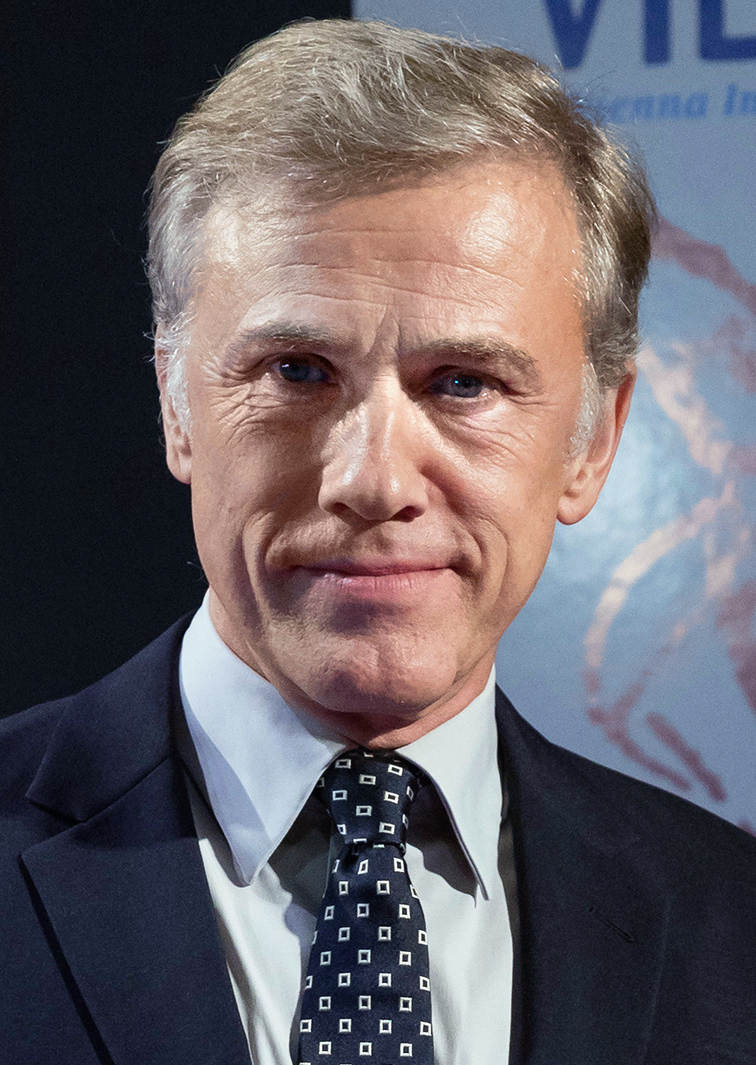
I love the idea of making him an older guy who should have known better. But at the same time, he would be formal, with European-style manners. As a result, I am going with Christoph Waltz for his look.
Because I pair him with Robin McKenna, they’ve got an obvious age difference. So in a way, you can see why she might want to throw him over for someone else.
Christoph Waltz, who I see as Elston Young. Image is from Wikipedia, by Manfred Werner (Tsui) – Own work, CC BY-SA 4.0, https://commons.wikimedia.org/w/index.php?curid=64147562
Purpose/Theme/Motivation
So, his original purpose coincides with the other members of the cabal—he wants power. But he at least knows when to quit.
Or, at least, to be satisfied with what he’s got.
Robin? Not so much.
But when she throws him over, he loses his clout with her. Because he’s a smart guy, he can see the writing on the wall.
Quotes {Josie has just gotten a tattoo from Elston to help her with time travel}
“I know the first time you and I met, that you believed I had had a relationship with Robin McKenna. You were right, of course—at the time. But things have changed.”
“The bloom is off the rose, I take it?”
“In a manner of speaking. It doesn’t help when someone you love takes up with an intimate colleague. You still need to see them, and all that.”
“Wait, I don’t think the timeline’s right. When I first saw you, I had already gotten an encrypted message.”
“Yes, you had. It wasn’t just the end of our relationship which convinced me to change my mind. But I needed—and still do, I might add—legal and rather real physical protections. I could plant the seed in your group and then eventually the dice would roll the way I want, and I would be free of the Yester Gang.”
“Why would you ever want to leave them? I would think you’d be sitting pretty.” She touched the bandage, and her wrist felt like it was burning. “Ow!”
“Now, will you listen to me and not touch the bandage? So, in answer to your question, it was all about power, to start. But you see, Robin has a rather deep and strong prejudice against the Obolonk race. Garnering and holding onto power stopped being good enough for her. She wanted to eliminate the Obolonks as well. Understand, my memory, and my own comprehension come from the current timeline. But I still know that the destruction of the Obolonk race was not in the original scheme. She was splitting her focus.”
“Power for both of you, and, er, this intimate colleague?”
“Not just for us. But Peter Ray was a particularly good find. He can be the face of everything. One of the faces, that is.”
“I don’t remember him originally being in charge of the OIA.”
“That’s because he wasn’t.”
Relationships
Like other members of the cabal, Elston has a relationship of some sort with all of them. But his closest relationship is with the villainess herself, Robin McKenna.
Elston Young and Robin McKenna
I didn’t originally intend for there to be a ‘love rhombus’ in the gang. But the more I thought about it, the more I liked the idea.
And so, she starts off as his lover. But then she changes her mind…
Because he’s humiliated and he still has to work with her, he gets an idea about how to turn the situation to his own, personal advantage.
But this crafty silver fox will go down swinging. However, if necessary, he will take everyone else with him.
Conflict and Turning Point
He has a few. One is when he gives Josie the tattoo. Now, he is far from being a good person. So, when he chooses to help her, it’s not out of the goodness of his own heart. Instead, it’s for his own personal advancement and safety—and nothing more.
Continuity/Easter Eggs
There is no continuity between him and other storylines.
Future Plans
He did not show up in the Time Addicts prequel, and he can’t show up in the Obolonks prequel (wrong time period). So, unless something big changes, I won’t be exploring his particular story any further.
Elston Young: Takeaways
Morally gray as much as he’s gray around the temples, Elston Young adds a dash of enigma to Time Addicts. Can he be trusted?
Only if it suits him.
Elston Young — because craven bad guys are never really repentant….
Want More of the Obolonk Universe?
If the story of the Obolonks resonates with you, then please be sure to check out my other articles about how our society turns tripartite, with humans, robots, and Obolonks.
Consider Shannon Duffy, One of My Original Characters
Who is Shannon Duffy?
The better question is: who are Shannon Duffy? Because this character isn’t human at all. They aren’t even one entity.
Er, what? The idea behind Shannon is a totally wacky one, I admit. It comes from a thought experiment.
What if your individual cells were sapient?
If they ever could be, then they would presumably congregate into a kind of colony. In this way, they would behave a lot like algae, although algae of course aren’t sapient, no matter how many of them you put together.
Where Did Shannon Duffy AKA Levi Fremder Come From?
Fan fiction, actually! I originally made a similar character (although with a different name) a part of a very futuristic time travel organization. But in that series of stories, they are almost a curiosity. Other characters (human and otherwise) interact with them, but their characteristics don’t come into play too often.
In general, they are just a kind of addled character. But that’s fan fiction. The use of a very similar character in The Real Hub of the Universe was for several purposes, not just as some oddity.
Note: the fan fiction creation was 100% my own and thoroughly original.
The Past is Prologue — Backstory for Shannon Duffy
Shannon themselves say it best.
“…You said you’d been here maybe ten thousand years, right?” The colony nodded. “Boston hasn’t existed that long. So where did you alight?”
“It was on the shores of what is now called Lake Victoria. It is a large lake in the center of the African continent.”
“Oh, my.”
“There were dense forests and many animals and of course there was water, and so we stayed, because it was a good place. Humans came and went and finally began to settle about eight thousand years later.”
“So, you were there for that long?”
“Yes. We observed humans for a while, and then decided they might be of interest to study, and so the concept of a subject was birthed.”
“And so, you just picked someone in Africa?”
“Yes. Her name was Kamali. It means ‘protector’. Kamali taught us how to interact with humans. We had been observing for a long time, but Kamali made it make more sense to us. She died young. It was while she was giving birth to her second son.”
“Oh, and what happened next?”
“We went north. We would meet subjects and it would only sometimes work out. We came to what you now call the Holy Land. We lived there a while, and moved onto Athens, and then to Alexandria, and later to Rome. We fell in with the Jewish people for several of your generations and we lived in various walled ghettos. We moved with our subjects, who were often persecuted. Before we came to the United States, we were living in an area called Friedberg. The people around us spoke German, but the people inside spoke Yiddish, mostly. We had spoken Yiddish for centuries and so were very familiar with the culture. We knew Herschel when he was a small child. He married when he was eighteen, and he decided to leave. He was a tailor and so he knew he could get work. He and Blima packed up everything and we traveled. The colony mostly flew as seagulls to give Blima some privacy. We would also swim as fish.”
Description
Because every cell is sapient, Shannon can change their look on a dime. They’re a bit of a shapeshifter, and in particular they don’t have a real backbone. Therefore, they can be paint or a flock of sparrows or really anything else, so long as mass is maintained. But this mass can break apart, so a flock (for example) can split and go into two different directions.
When Ceilidh O’Malley meets Shannon, it’s in the Boston Public Garden. Dressed as an Orthodox Jew, the colony is going by the name of Levi Fremder. Initially, they speak with a heavy Yiddish accent.
But Shannon (the name Ceilidh gives them) is adaptable if nothing else, so their manner of speech changes to suit her.
Purpose/Theme/Motivation
Shannon injects some badly-needed sci fi into the storyline. Otherwise, I had been going along, telling more of a historical fiction tale. Shannon immediately changes that.
They also have one very particular purpose: this is an era where people are only starting to get telephones. Hence, Shannon speeds up communications. They can also move quickly (like a flock of sparrows), so they speed up some transportation as well.
In this way, the story gets around some difficult constraints of the time.
Shannon is also a convenient character because they treat Ceilidh like a subject they are studying. While the POV isn’t theirs (it’s Ceilidh’s all the way), this still affords some ways to get across an outsider’s perspective.
In addition, they are often misunderstood and even feared. In this way, Shannon doesn’t always make Ceilidh’s life easier. Sometimes, without even trying to, they make it tougher.
Quotes {Ceilidh is talking to the colony while apple picking for her employer}
Ceilidh took a basket and wandered off, looking for greener apples which she could still pluck from the trees with ease. A cloud of dust settled near her and rematerialized into the shape of the oddly-dressed boy. She started at the sight of him. “Oh, my goodness!”
“Again, the colony does not wish to upset you.”
“You startled me.” She pretended to be overly interested in the nearest apple tree.
“We respect your privacy and your wishes. We have held back to give you a chance to consider our offer of a subject and observer connection.” His speech was as stilted and monotone as ever, but his accent had diminished. Perhaps he was learning her tongue as he went along.
“I still don’t know. Up until now, I believed I’d imagined the entire encounter.”
“It was not imagined.”
“I can see so now. Tell me, eh,” she blinked a few times in the bright sunshine, “I don’t even know your name.”
“The subject names the colony.”
“What was, oh dear, what was your most recent name, then?”
“Levi Fremder.”
“Beg pardon?”
“In Yiddish, it means ‘foreign priest’.”
“Are you a priest, then?”
“Not truly. Herschel thought it was a good and fine spiritual name. Blima thought it was inappropriate.”
“So, Blima didn’t like you?”
“We believe so now. A plurality of all voters believe she was concerned about her marriage. In his final days of life, Blima blocked our access to Herschel. We understand he had what you call a stroke. We could have saved his life and believe we could have prevented the worst of the damage, but she would not permit access.”
Relationships
Of course, Shannon has their own internal relationships. The above reference to voters is not by accident; they are ruled by a pure democracy, where majority rules. But it almost makes sense, for if a creature’s head is made up of identical materials as its feet, which part should be superior?
External relationships are a different matter.
Shannon and Kamali
She is the first human subject Shannon ever studies. And while she’s never actually on screen, her presence is still acutely felt. So much so that, if she had been a difficult or nasty person, the colony alien would have turned out rather differently.
Shannon and Herschel (and Blima)
The most recent subject/observer relationship for Shannon also brings them out of the Jewish ghettos of Europe and to America. But this relationship is also fraught with the jealousy (and probably envy) expressed by the subject’s wife. But it makes sense that, at times, the colony would get into the middle of a marriage.
In particular, during this time period, Herschel and Blima would have been in an arranged marriage. They would have met at age 13, been engaged via an agreement between both sets of parents, and then married a few years later. So, it would have been a difficult position for Blima no matter what.
And then for this strange man, who behaves oddly, to be her husband’s confidante? That would be even more difficult for her to bear. I didn’t want her to be a villain and I don’t intend her to be interpreted as such. Rather, I want the reader to understand that sometimes a subject/observer relationship wouldn’t quite work out so well.
Shannon and Ceilidh
While the colony initially concerns her and makes her feel as if she’s going mad, they come to an understanding. The colony becomes Ceilidh’s helper and companion. And, eventually, her friend.
Shannon and Dr. Devon Grace
With Dr. Grace, Shannon learns to play draughts (checkers) and they have conversations about the universe. Devon is lonely and starved for intellectual companionship. Shannon fulfills that need.
Conflict and Turning Point
Much like for the rest of the characters, Shannon’s conflict and turning point revolves around the various threats to the Earth which Ceilidh, Devon, and the others uncover. And again, because they can move more quickly than the conventional modes of transportation of the time, their help is vital.
Continuity/Easter Eggs
Beyond the fan fiction connection, Blima (!) is a Shapiro. This connects at least her with Greg and Marnie.
Future Plans
Much like Tommy 2000 and Selkhet 3000 from the Obolonk universe, Shannon Duffy could technically live forever—and even longer than those two robots, as Shannon doesn’t need spare parts. So, they can hold on until the essential heat death of the universe makes it so atoms can’t hold together any longer.
But don’t worry about Shannon too much. It’ll be trillions of years from now, and we certainly won’t be around to see it.
As for my own plans, they didn’t show up in the prequel. But given how they can live forever, they could conceivably cross over into another one of my universes. Maybe they’ll make friends with an Obolonk…?
Shannon Duffy: Takeaways
More than a plot device or an expository mouthpiece, Shannon Duffy plays a vital role in keeping the Real Hub universe humming.
Shannon Duffy — more than a plot device.
Want More of Shannon Duffy?
If Shannon resonates with you, then check out my other articles about them, Ceilidh, Johnny, Devon, Frances, and everyone else as they work to prevent a temporally jacked-up genocide.
The final of the four chief characters in Untrustworthy undergoes almost as many changes as Tathrelle does.
Where Did Adger Come From?
By the time I got to this character, I was getting tired of making up alien names. Hence, his name is just the word badger with the first letter off. Er, sorry, character!
The Past is Prologue — Backstory for Adger
Hired by Velexio and various generals to get their military dictatorship in power and then increase their power, no one counted on Adger catching feelings.
Description
Like all other Cabossian men, he’s bald and has three fingers on each hand. A fourth appendage on each hand is his two-part genitals. Otherwise, I have no real description of him, and no thoughts of anyone who I picture as ‘playing’ him.
Purpose/Theme/Motivation
As the world shifts around the characters, Adger’s own purposes begin to change. He goes from being a jerk (in the best description of him) to being more like a lovesick fool than anything else. But he is never a hero and he is never the kind of person who readers would or should root for.
However, at least, unlike Velexio, he has occasional positive-ish moments. But they are few and far between, and they are blink-and-you’ll-miss-them fast.
Quotes {Tathrelle and Adger meet for the first time and things do not go well…}
Adger … turned and smiled at her and bowed slightly. “I’ll leave you two to get acquainted,” Velexio said and departed.
Once Velexio was gone, Adger shut the door to the small room. He looked Tathrelle up and down. “You are very interesting,” he stated.
“How so?” Tathrelle’s tone was skeptical.
“And you even told the people to call you by your first name! Do you have any idea what sort of annoying attention that’s going to get you? Ah,” he shook his head, “you are clearly a rank amateur. Still, you are a bit promising, I think.” He came closer to her. “You are an attractive woman. A little rough around the edges, but that may be how and why you were elected in the first place. It seems the people have a certain type of taste in such matters, eh?”
“Taste?”
“Oh, do you honestly believe that you were elected due to your acumen or the like? You had numerous rivals, as I recall. Or have you yourself forgotten that small detail? You may have thought it was an insignificant detail, but, you see, it’s really not. So you were selected by the people, but they hardly knew anything about you – or about any of your rivals, I imagine. But they picked you because,” he came closer, “you have … something.”
“I wish I knew what you were talking about, Adger.”
“Do you not, though? It’s a somewhat earthy appeal, you see. I had not really considered it. I had discounted it, you see, but now that I’ve met you, I think they might’ve been onto something. Of course, you could stand to be better in many ways, but in the basic respects, you’ve got it down pat.”
Relationships
Tathrelle
While he doesn’t get off on the right foot with her initially, he starts trying to make up for it as the story goes on. In fact, considering the changes that he goes through, it is highly likely that the carefully calibrated changes have some collateral damage and are affecting him as well.
As a result, he goes from a sexually harassing lout to, eventually, a person who genuinely cares about Tathrelle. But he’s got a lot of very funny ways of showing it.
Velexio
As Adger’s boss, Velexio should be in charge of him and telling him what to do. And Adger should be listening! But instead, he marches to the beat of his own drum. His reckless actions compound the conflicts and issues in the story.
While Velexio and the generals are the main architects of the misery in the story, Adger is far from blameless. Very far from blameless.
Conflict and Turning Point
When the rioting starts, he is in the thick of it. And while I pattern the rioting after Kristallnacht, his involvement is a lot more like a different incident, the January 6th attack on the US Capitol. Considering that I wrote Untrustworthy long before 45 even ran for president, I’m a little nervous about being a bit of a prophetess.
But the changes which he goes through are, essentially, his own damned fault. The guy never knows when to quit, and he pays for it.
Continuity/Easter Eggs
Because there is virtually no continuity between Untrustworthy and anything else I have written, there are no real Easter eggs or the like which you can associate with this character.
Future Plans
I have no real future plans for him, although he does show up in the prequel.
Adger: Takeaways
Unlike Velexio, who is essentially purely evil for evil’s sake, Adger has some layers to him. But he never uses his talents or intelligence for anything beyond the most selfish of motives. And in the prequel, he’s even more of a willing participant.
Adger — the lackey who does the most damage so the powers that be don’t have to get their hands dirty.
Want More of Adger and the Rest of Untrustworthy?
If Untrustworthy resonates with you, then check out my other articles about how an alien society devolves into fascism.







You must be logged in to post a comment.